Group Exhibition
(Slow Shutter Speed, Long Exposures)
17 Oct - 2 Nov 2025
Out of Sight, Antwerp
Curator
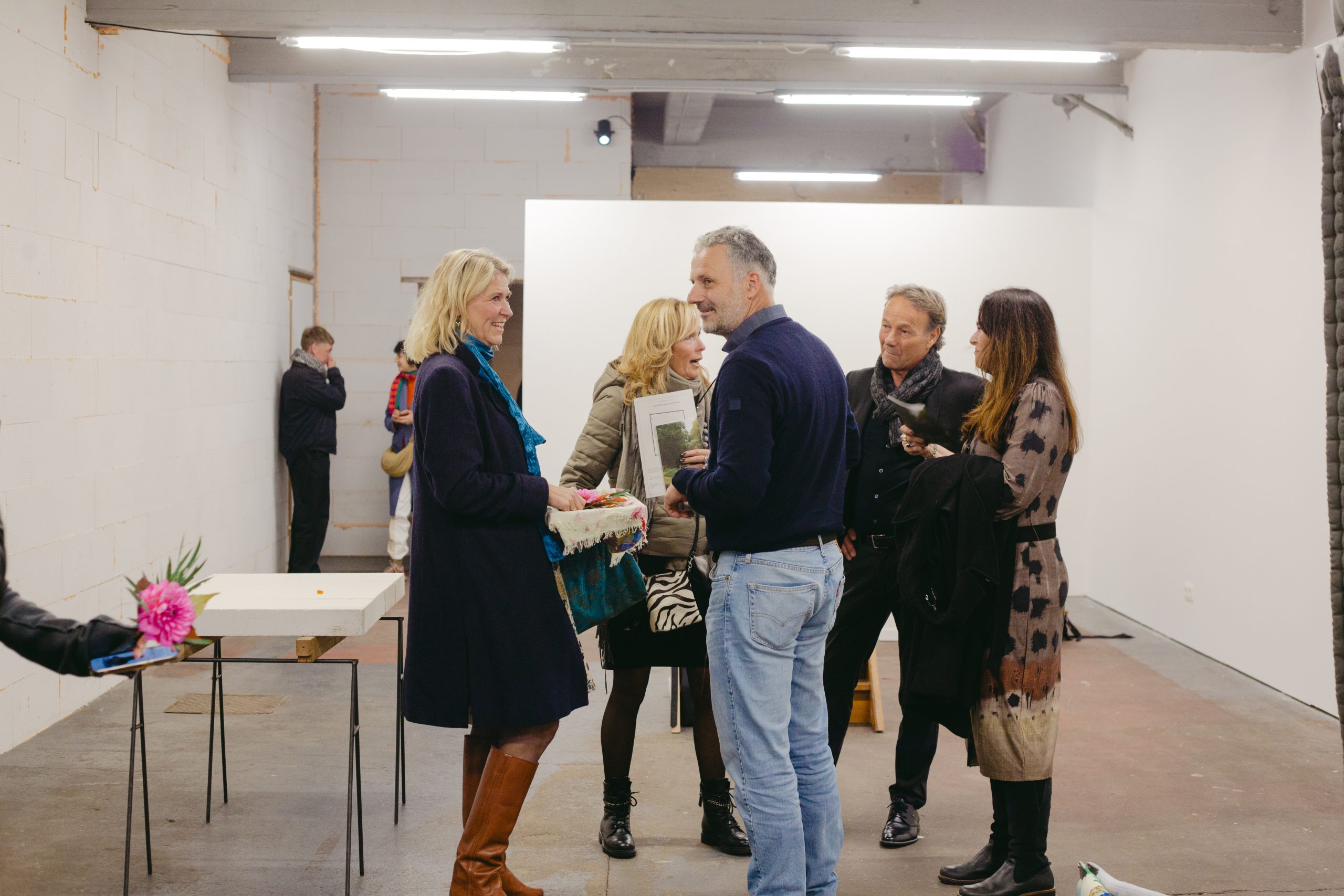
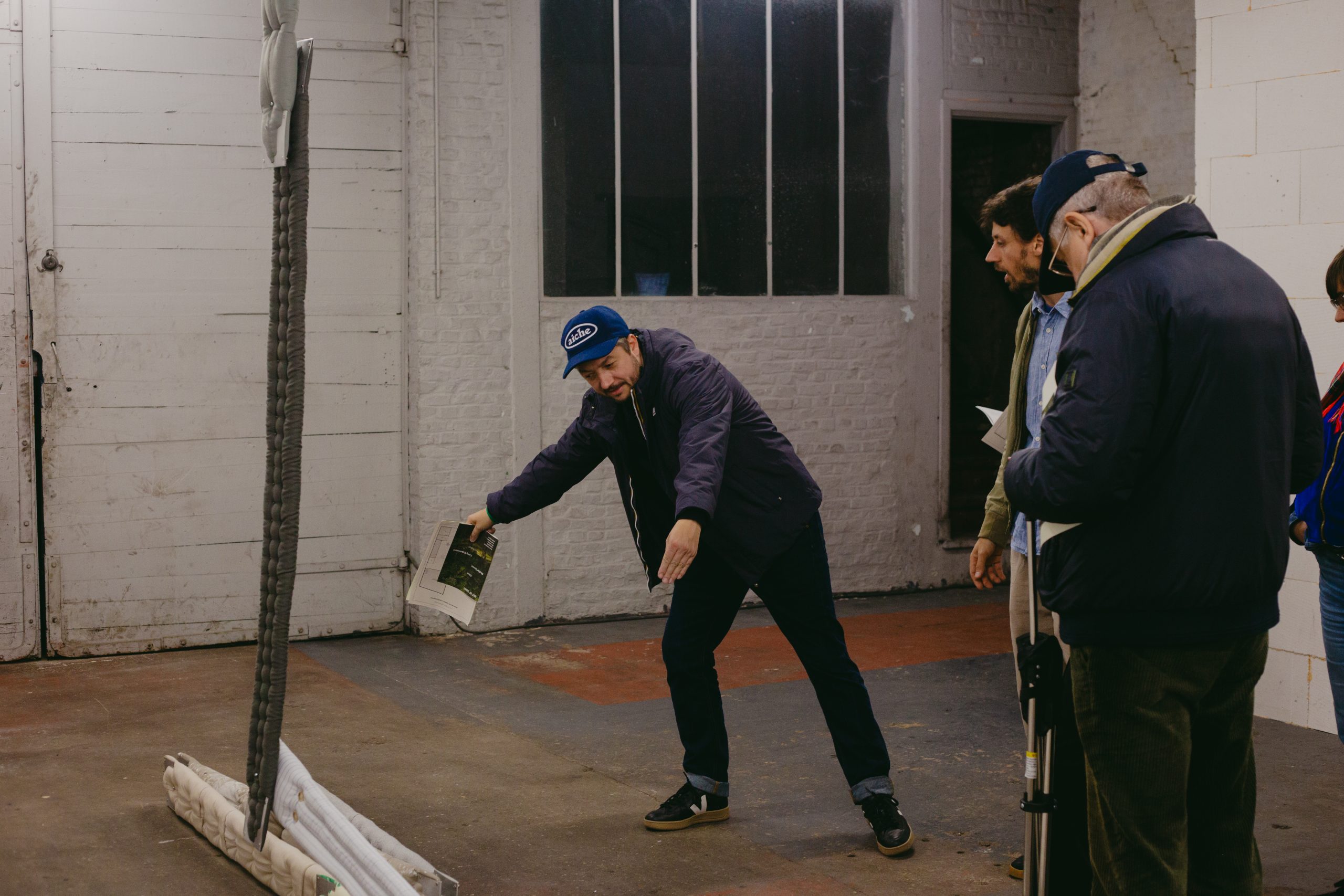
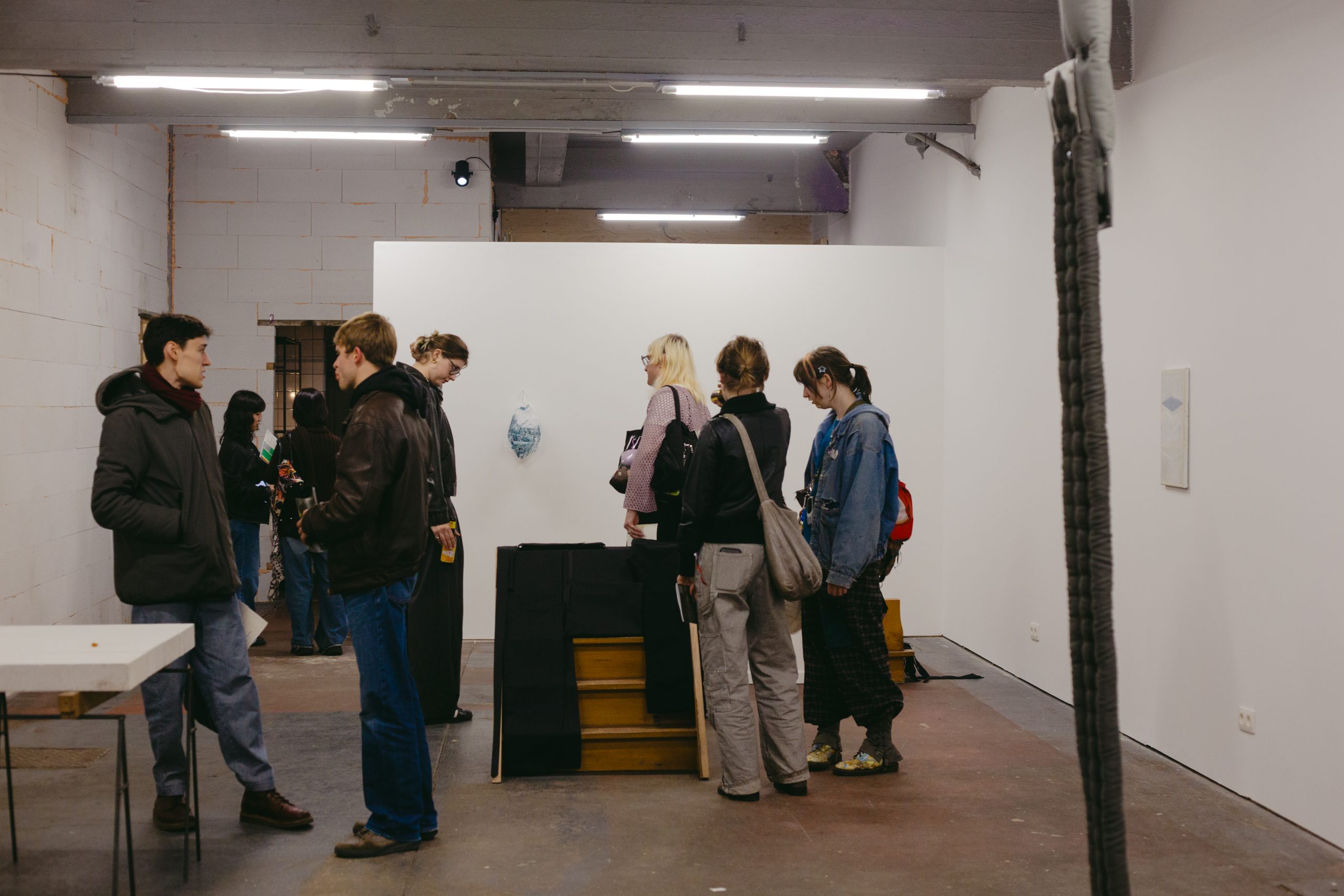
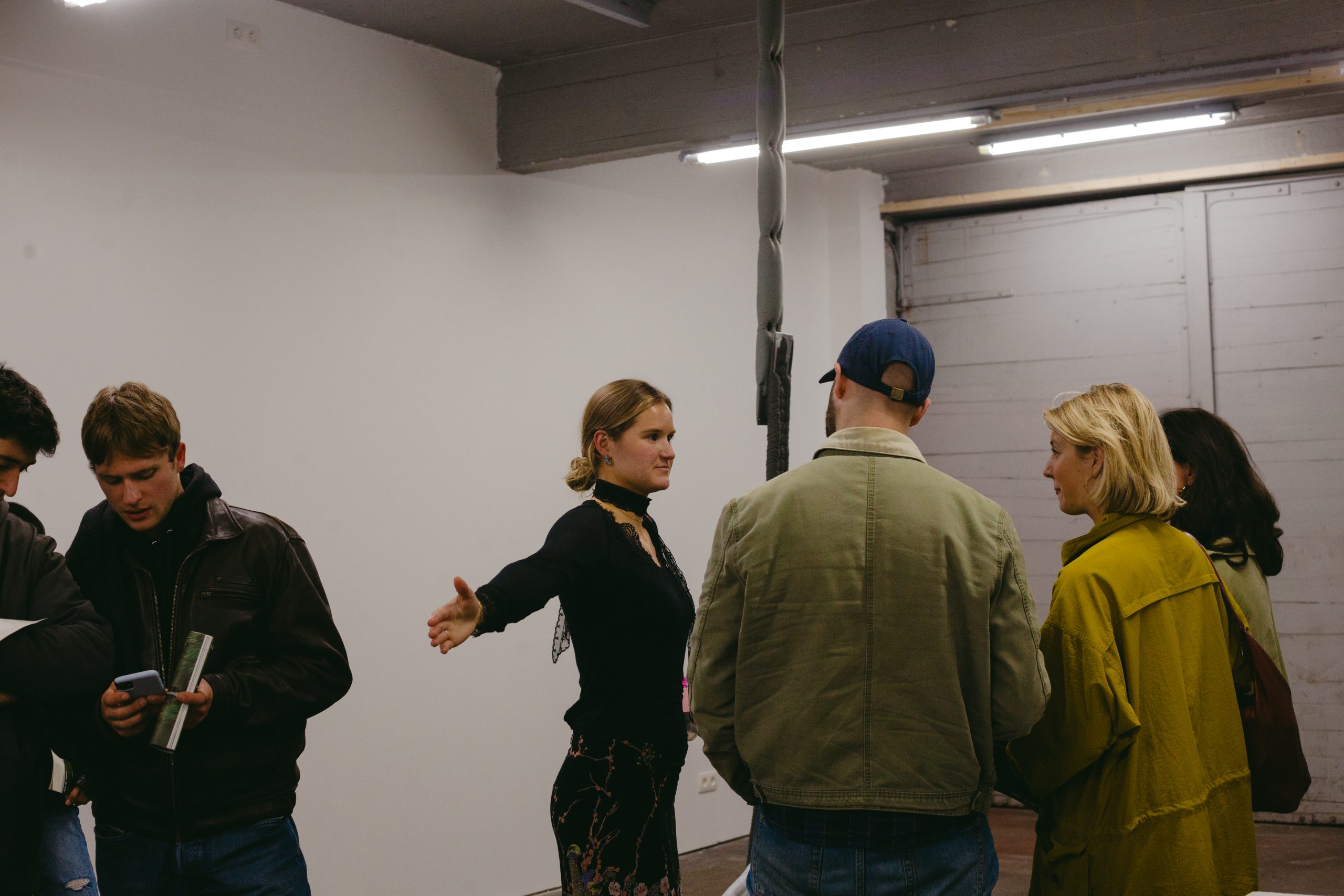
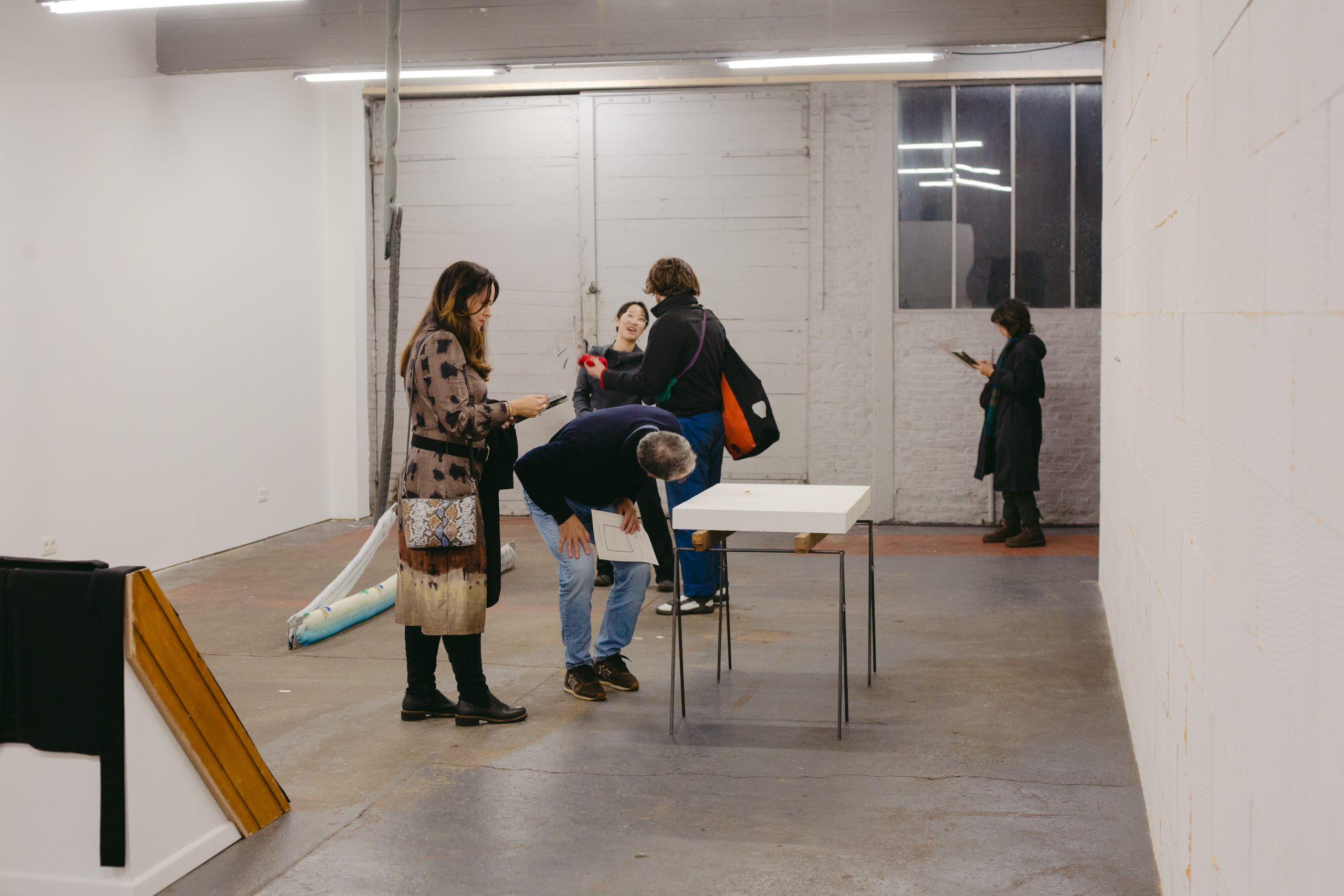
The group exhibition (Slow Shutter Speed, Long Exposures) is built around the first artistic encounters between Sarah Smolders and the artists Anna van Bommel, Jiyoung Chu, Rik Van Gorp, and Rabten Tenzin. In addition to the work from those initial encounters, they were invited to develop new creations for the spaces at Out of Sight.
The choice to facilitate new work was a natural one for Smolders. It will come as no surprise to some that the practices of the invited artists often seek out points of tension or touch upon liminal zones – such as time, scale, space, repetition, labour, or question limits of the body.
For this exhibition, Smolders also developed a new work, Notes on Places. For them, this series functions as a visual – non-verbal – exhibition text, complementing the exhibition and offering a literal point of reference to navigate through it.
Our first contact;
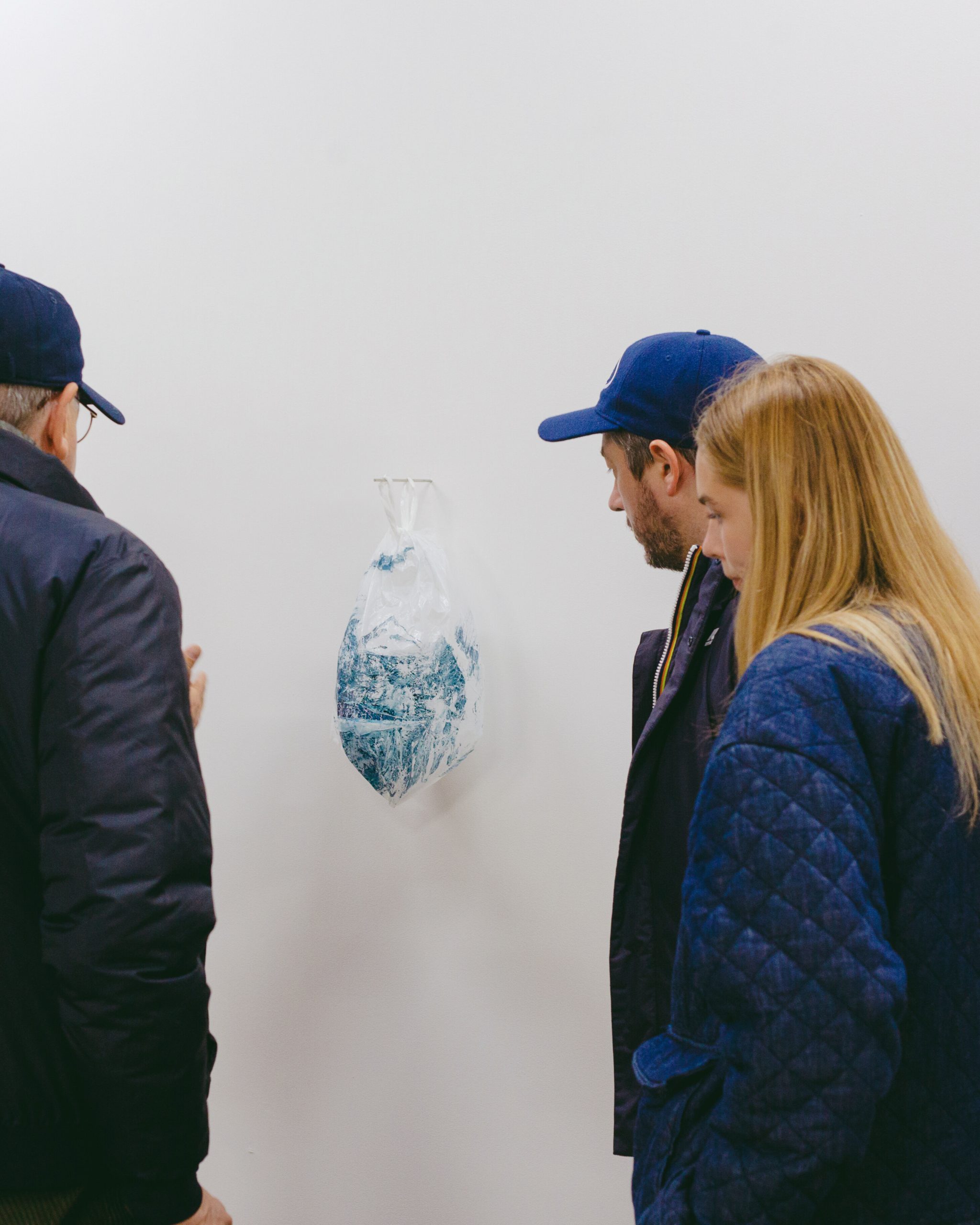
I remember my first encounter with the painting that moved against gravity without pretence. The subtly creaking sound of the thin plastic, tied up to trap air, announced the barely visible erosion of the mountainside – built up out of paint.
I think back to when the slightly musty air of the often too noisy gathering space became saturated with the scent of resin and mint, allowing me, in thought, together with the two still-unknown figures in the palm of her hand, to escape the space into a pine forest bordering the edge of a lake on an overly sultry summer evening in Lille.
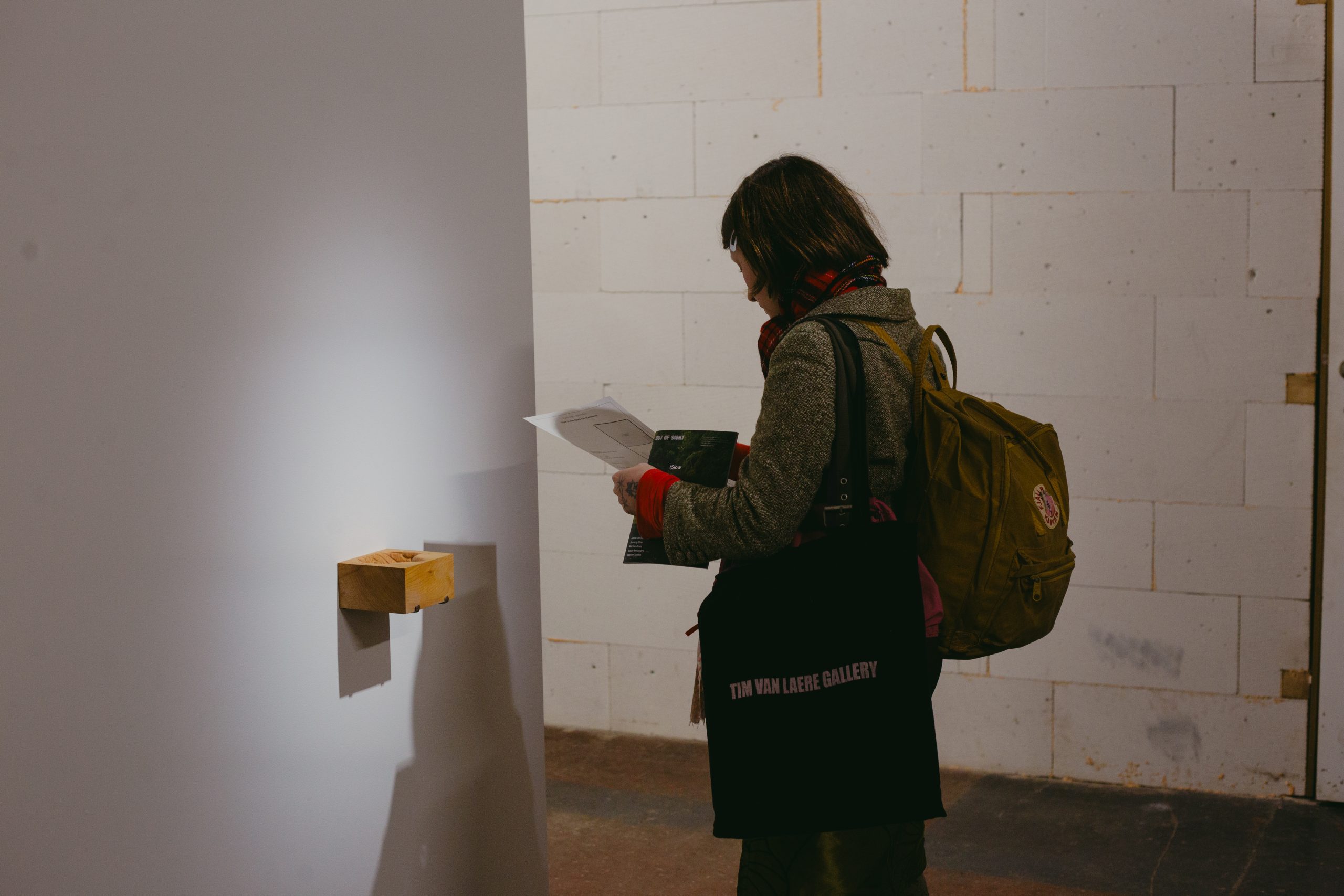
Or when, as part of a circle of eyes, my gaze was directed at the ground, into a block of wood, where I thought I could read the dermatoglyphs of a folded index finger in the wood’s growth rings. Then, the palm of two hands – carefully touching each other in the depth of the massive block – revealed themselves. They held a generous, empty space, which shortly after was filled with rice from a nearby sack.
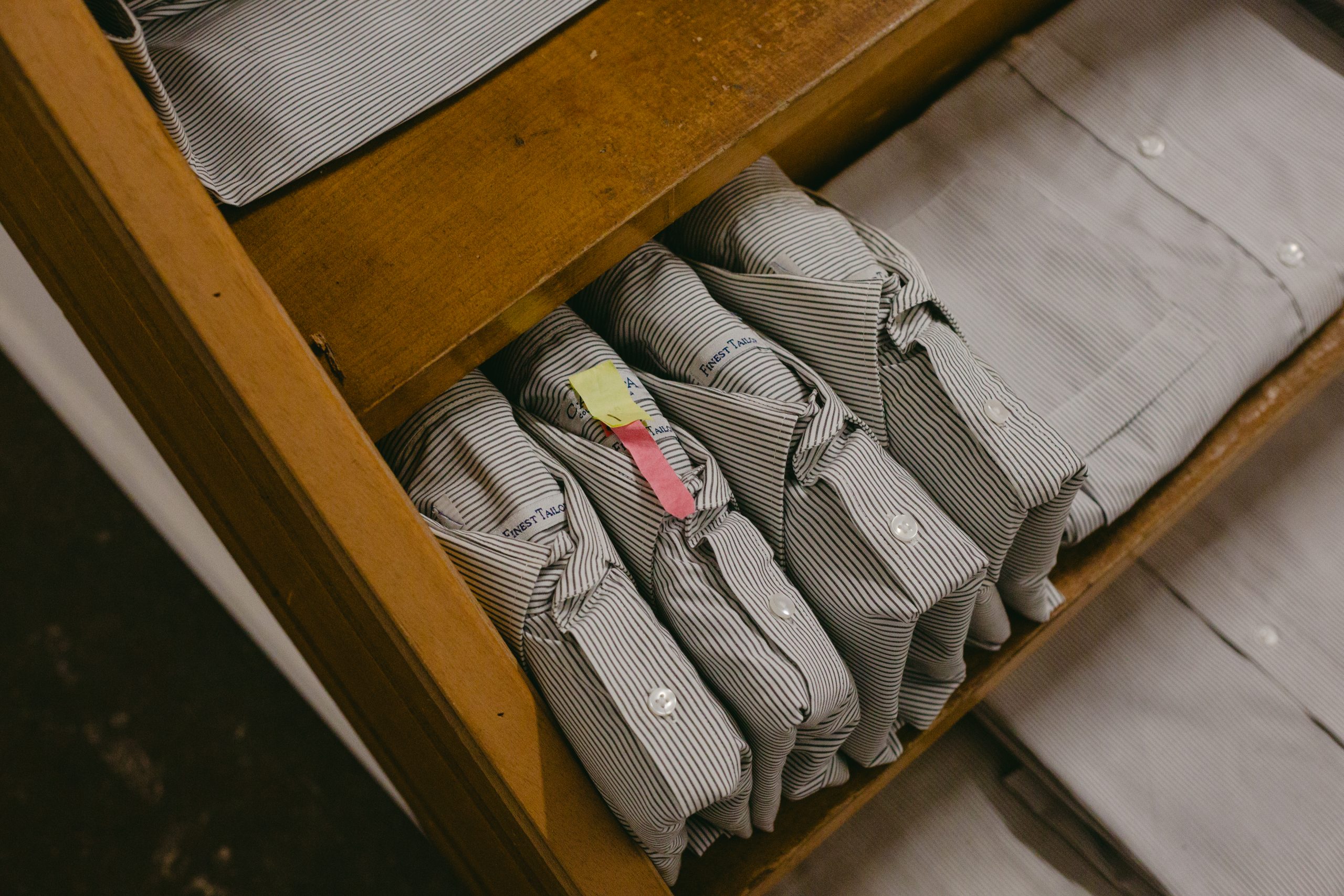
Finally, I remember a row of monochrome paintings that, leaning on seemingly casually chosen wooden blocks of different types and sizes, attempted to disappear into the seam between floor and wall. A tension – in a margin – that I later noticed again in the folds of a precisely folded cotton shirt that seemed to almost multiply into a stack.
(Slow Shutter Speed, Long Exposures) is an invitation to take the time to encounter the works for the first time – or once again – so that they may later resonate and be remembered in other spaces.
— Sarah Smolders
:: WORKS IN THE EXHIBITION ::
Anna van Bommel
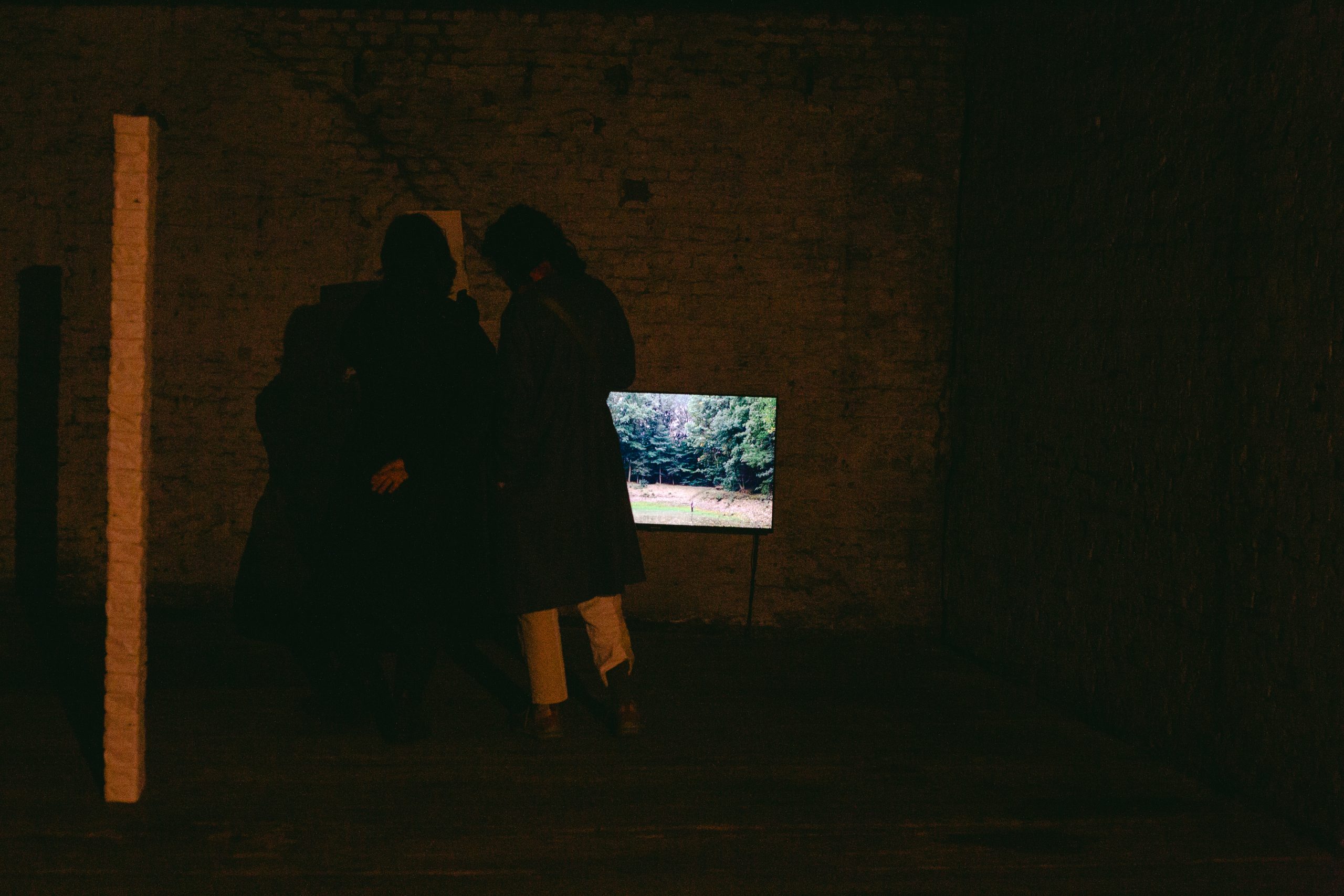
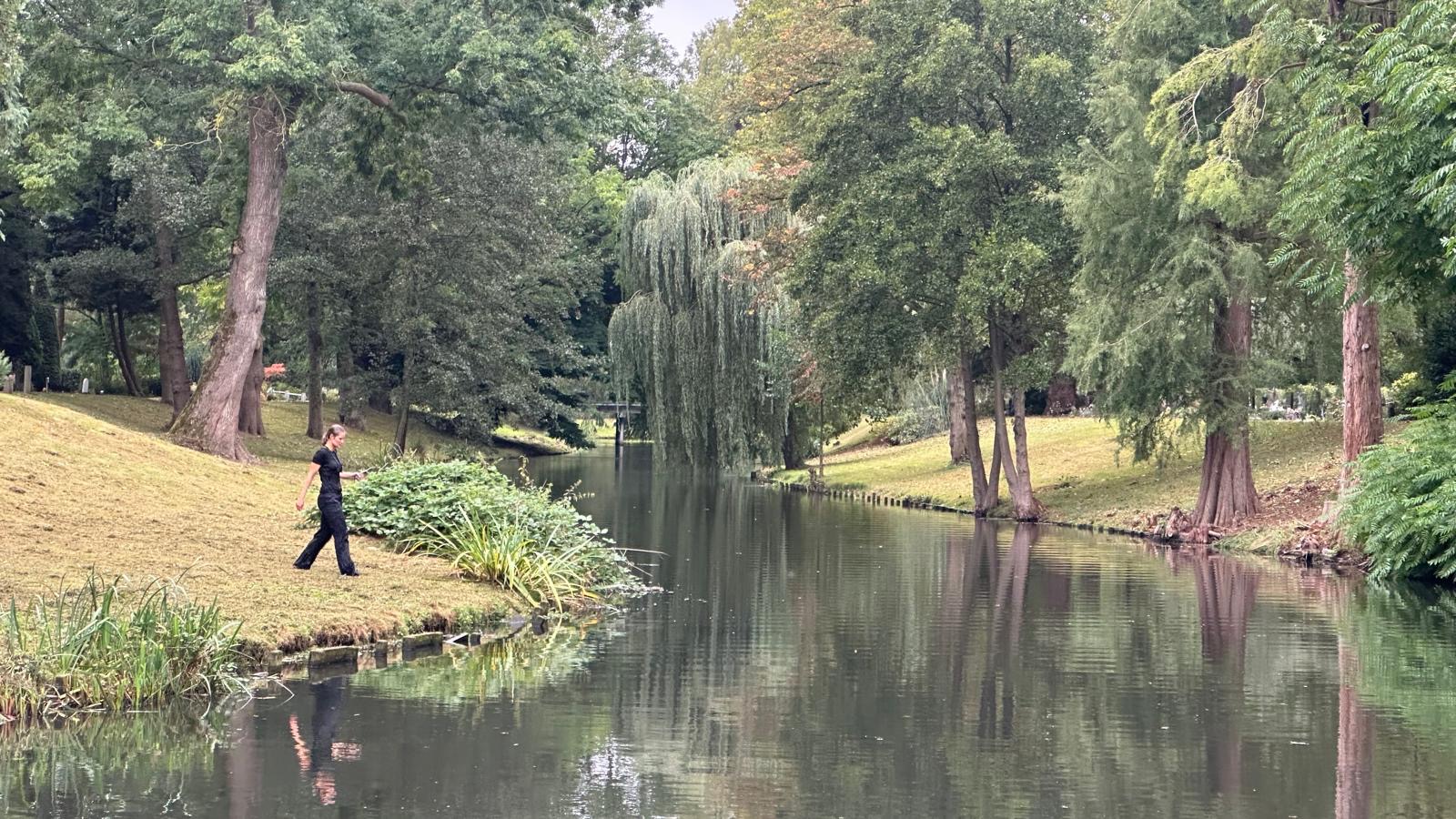
Fall 12, Bosschenhoofd | 2025, Video (colour, silent, 2’04” in loop)
Fall 13, Rotterdam | 2025, Video (colour, silent, 1’30” in loop)
Fall 12 & 13 are part of an ongoing series of performances in which the artist repeatedly documents herself falling into water. These two most recent versions show the same controlled action – a body walking to a lake, falling, and then walking out of it – yet highlight the evolution in her research. Where earlier works often explored the hesitation before the fall, the focus here lies on the immediacy and physical reality of the fall itself.
The work has become a ritual, a gesture that repeats itself yet is never the same. By capturing the fall in different natural environments and moments, the artist examines the nuances of surrender, time, and the relationship between body and space. This series, which she continues to expand, acts as a visual diary of an enduring fascination with what it means to fall – not as failure, but as a form of movement, vertical to horizontal, a moment of contact between body and world.
Thank you: Marjolein Tebrunsvelt, Inneke Van Waeyenberghe, Wim Janssen
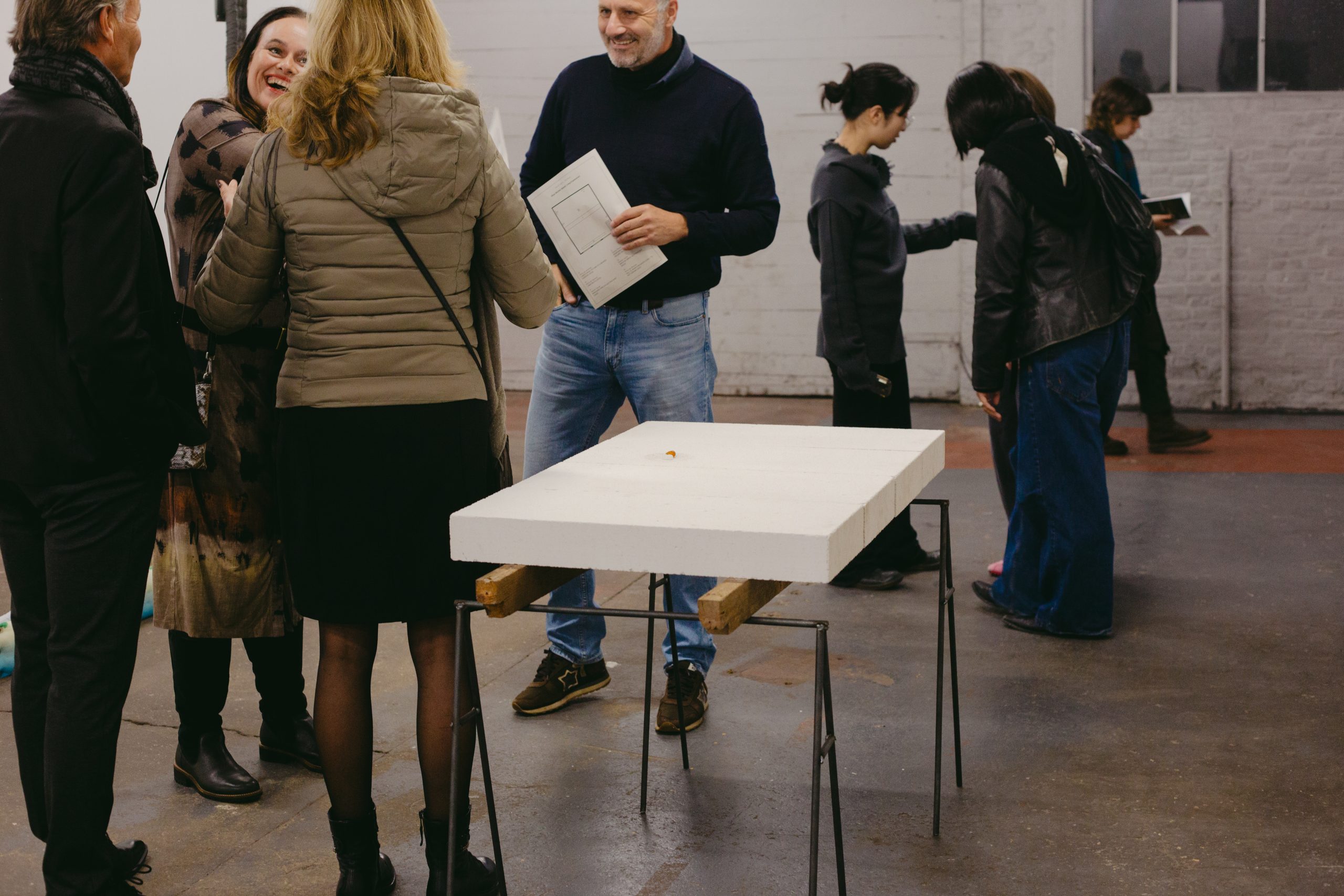
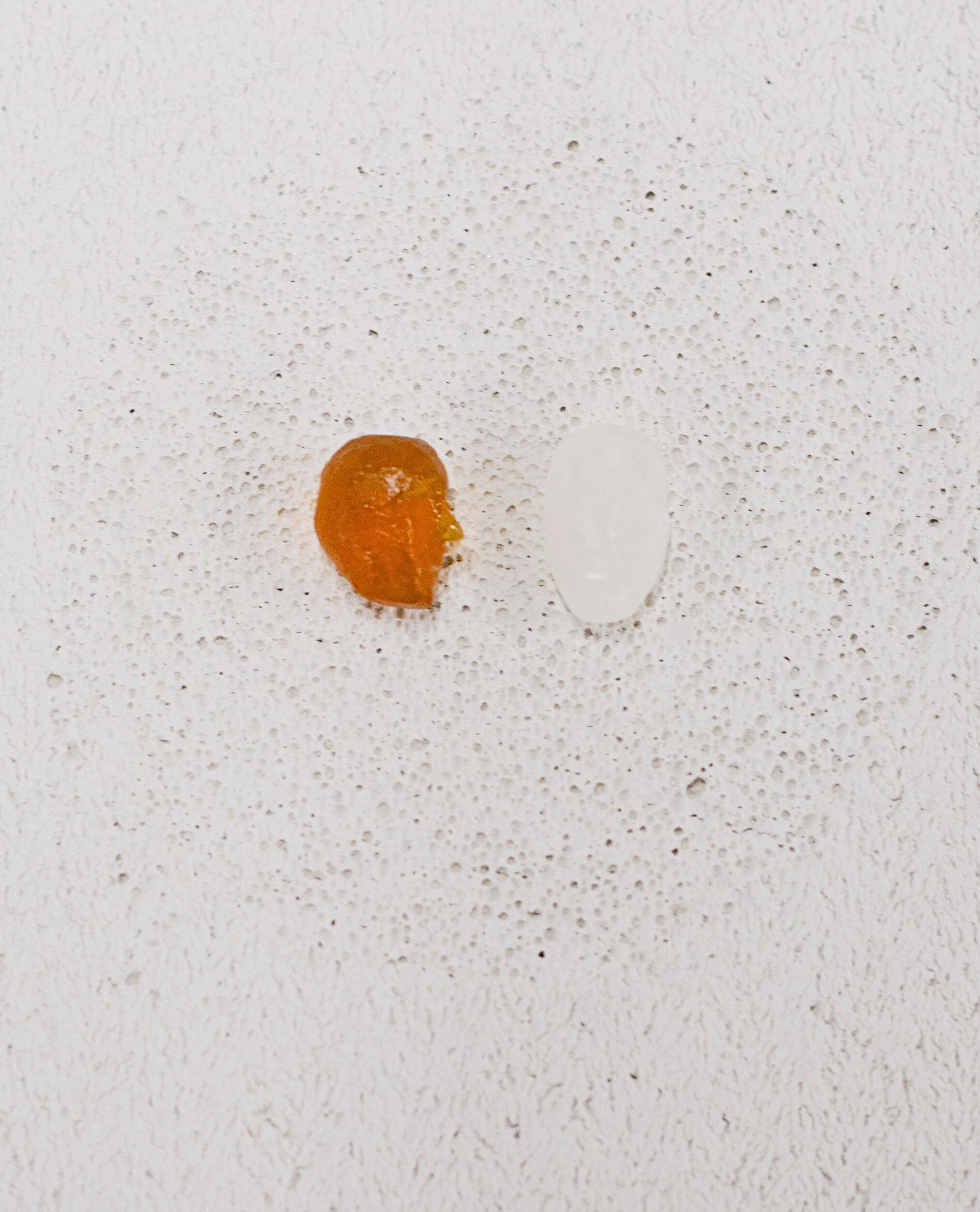
Papa & Marc | 2022, Sculptures (Menthol pastille, solid wood resin, 2x1x0,7cm each)
The two miniature portraits translate the artist’s father figures into two distinct material forms. Marc is carved from a Vicks menthol pastille (2x1x0.7 cm). Referring to his fascination with eucalyptus and menthol, substances to keep things “open” and clear. This choice transforms a personal artifact of his daily rituals into a fragile, dissolving portrait.
Its counterpart, Papa, is sculpted from solid wood resin, a material that directly references his habit of searching for fragrant tree bark in the forest. The resin, the ‘blood of the tree’, evokes a shared memory of place and a foundational, almost primal connection to nature.
Presented together, the pair creates a silent dialogue on intimate family dynamics. They explore how personal bonds are physically held and remembered, whether as something that slowly dissolves to clear the air, or as something solid you can hold in your palm, infused with the earthy smell of sap and wood. The size of the objects makes them intimate and precious, seemingly negligible, but deeply significant to their maker.
Linea Curva. Picture of a bended horizon | 2025, UV-print on steel, 38x25cm
This work consists of a horizon photograph printed on a polished metal plate. In this print, a slight curve is visible. The photo captures what the eye suspects but the camera normally corrects: the curvature of the earth. The horizon is a line I keep returning to, not just as an image, but as a thought. It’s a boundary that marks what you can see, while suggesting what lies beyond. Like the gutter, the fall, or the flight of the fly, this horizon describes a movement within a structure.
The horizon seems to be a limit, but at the same time it suggests that there is something beyond. It’s a trick of perspective, a paradox: the eye’s inability to grasp the full scope of the earth’s body but the mind’s ability to understand just that. I love to look at the sea; to look at the horizon and so I tried to capture the sea with a camera, but it resulted in a picture where the earth gets a weird inward bend because the edges were overcorrected. It reminded me of the sailors, the first seamen. That really believed that the world would stop behind that border. They really thought they would fall from the earth’s surface. — Anna van Bommel’s text fragment from the introduction of master’s thesis where she reflected on uncertainties in Art.
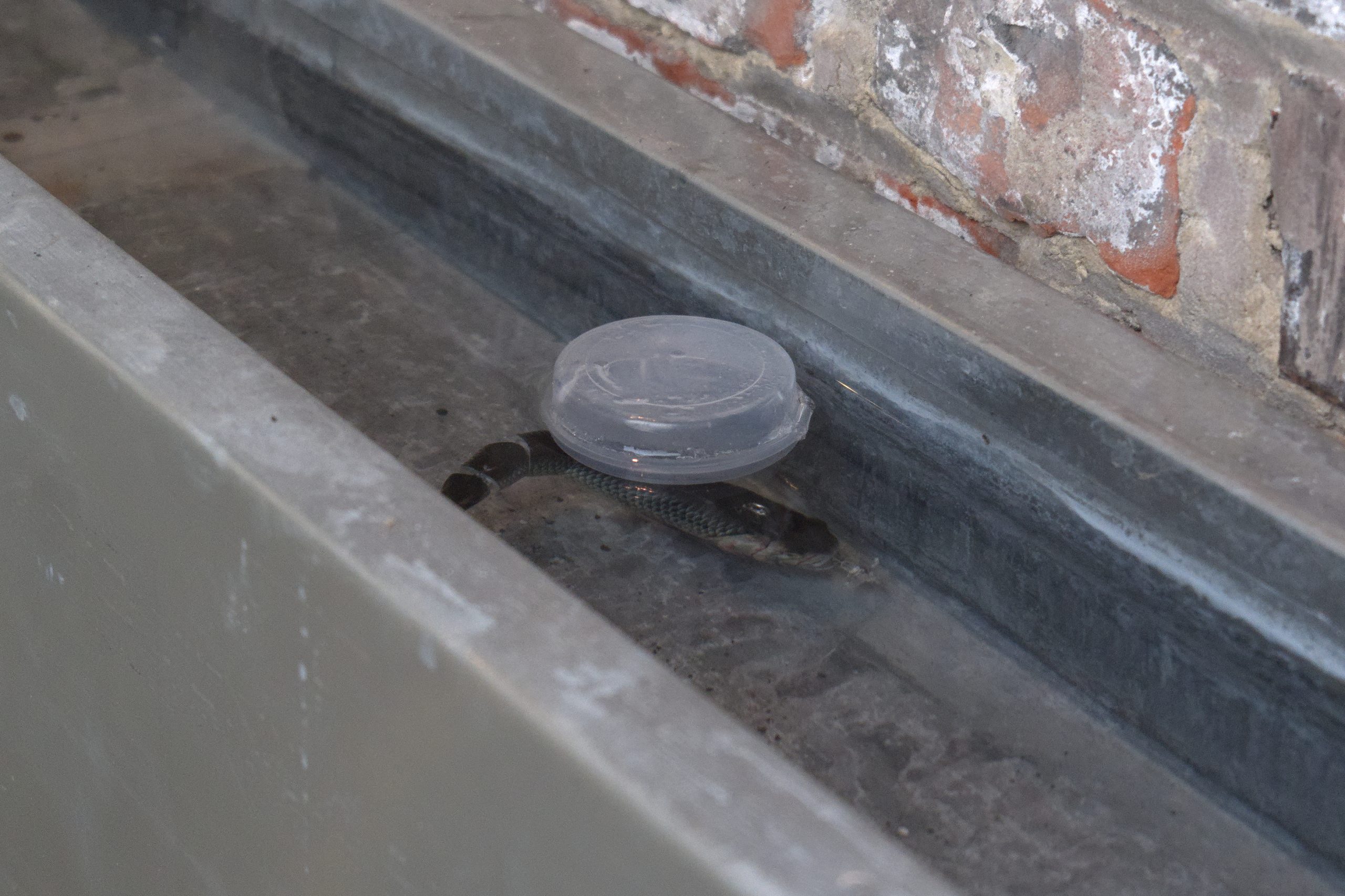
Linea Recta | 2025, Sculpture (Wood, zinc, mechanical swimming fish, 30x14x550cm)
Linea Recta is a 5.5-meter-long zinc gutter-like piece, filled with water, containing a small mechanical fish swimming an endless, predictable path between its edges. The work explores the tension between freedom and containment. It examines the line as both a boundary and a direction. The gutter’s straight trajectory represents control and structure, while the fish’s autonomous movement maintains its own rhythm.
The piece invites viewers to observe what unfolds within strict frameworks, raising questions about repetition, time, and the space that emerges within set boundaries. It shows how something simple -a fish swimming laps- can gain poetic resonance through the context in which it’s placed.
Jiyoung Chu
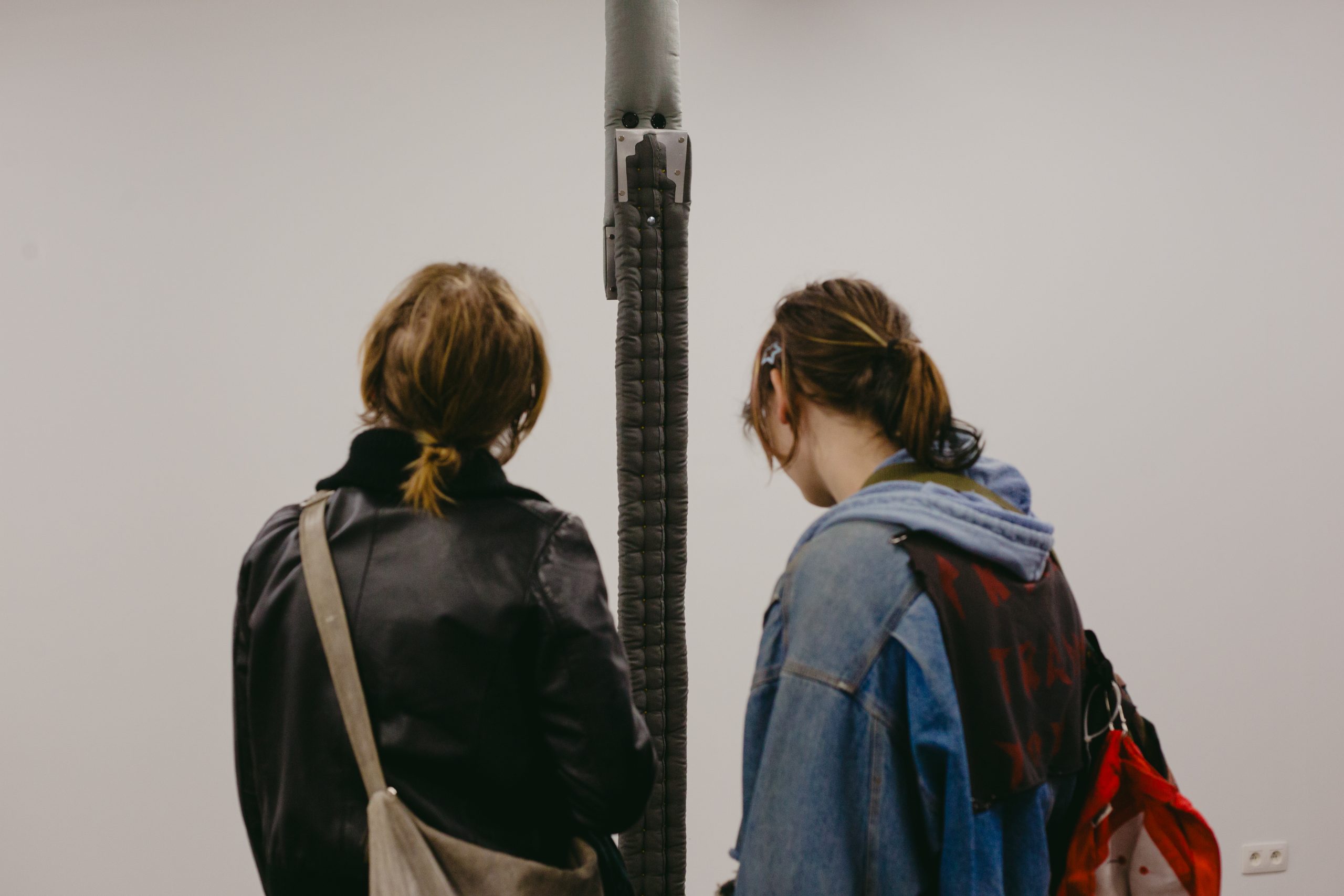
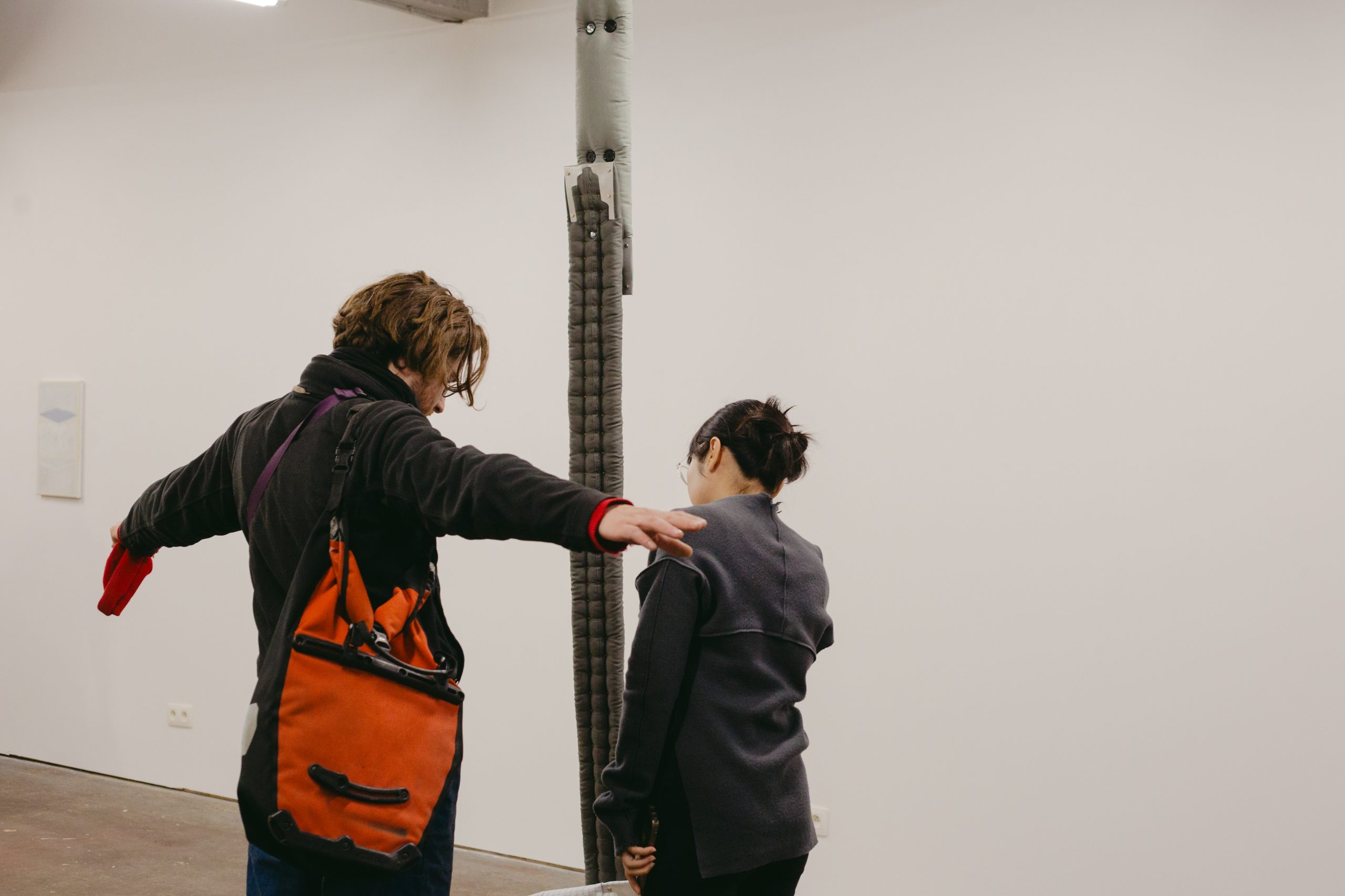
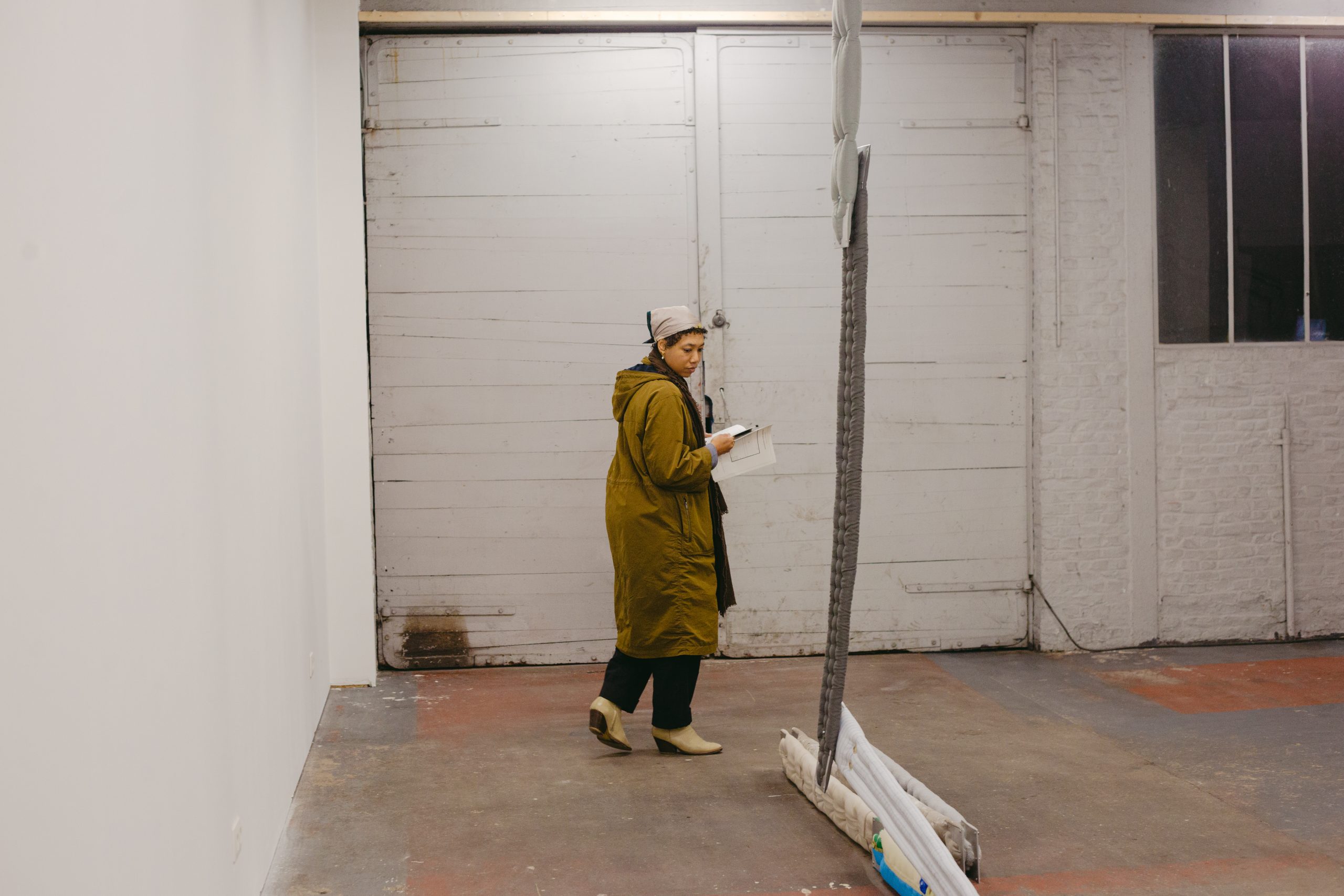
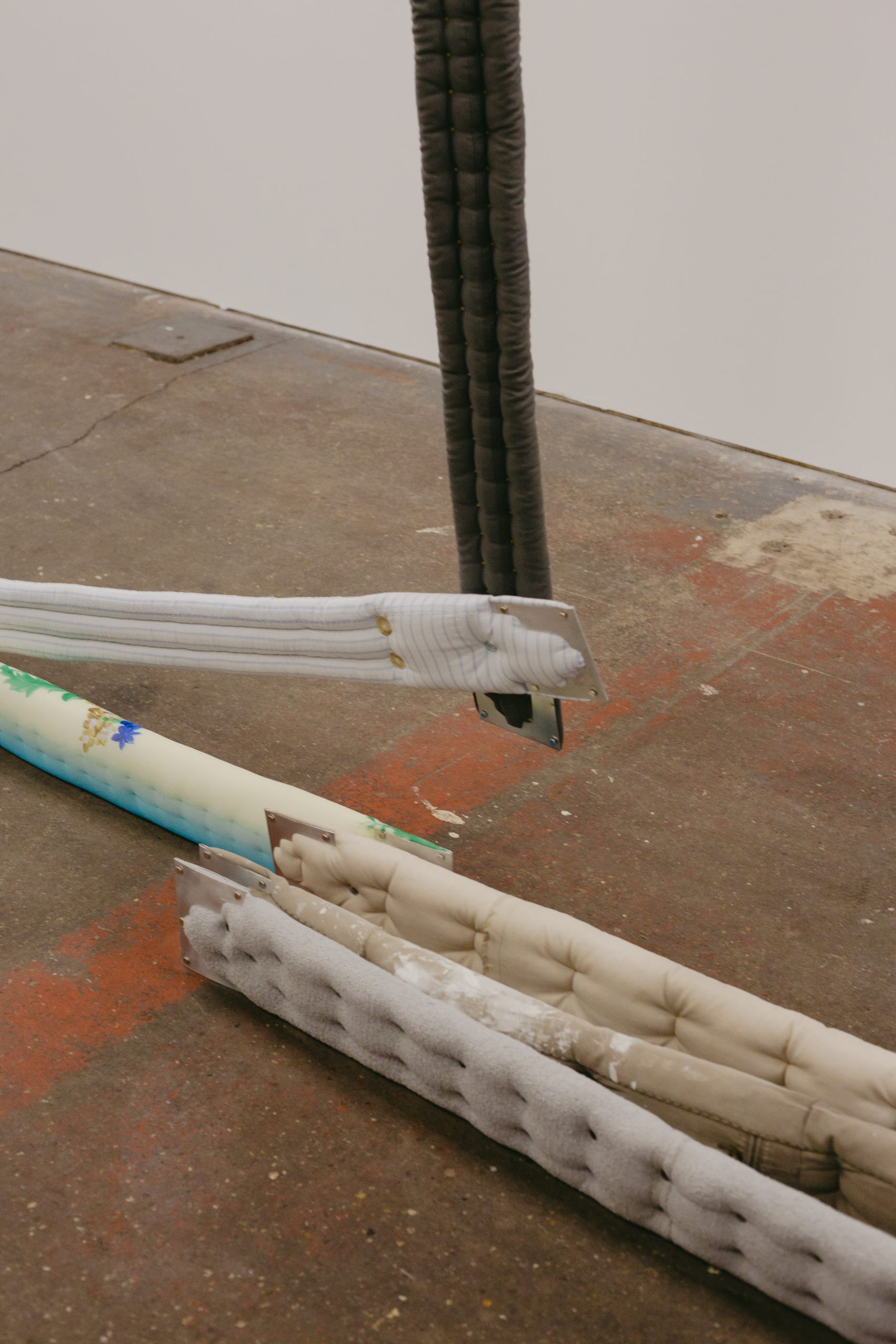
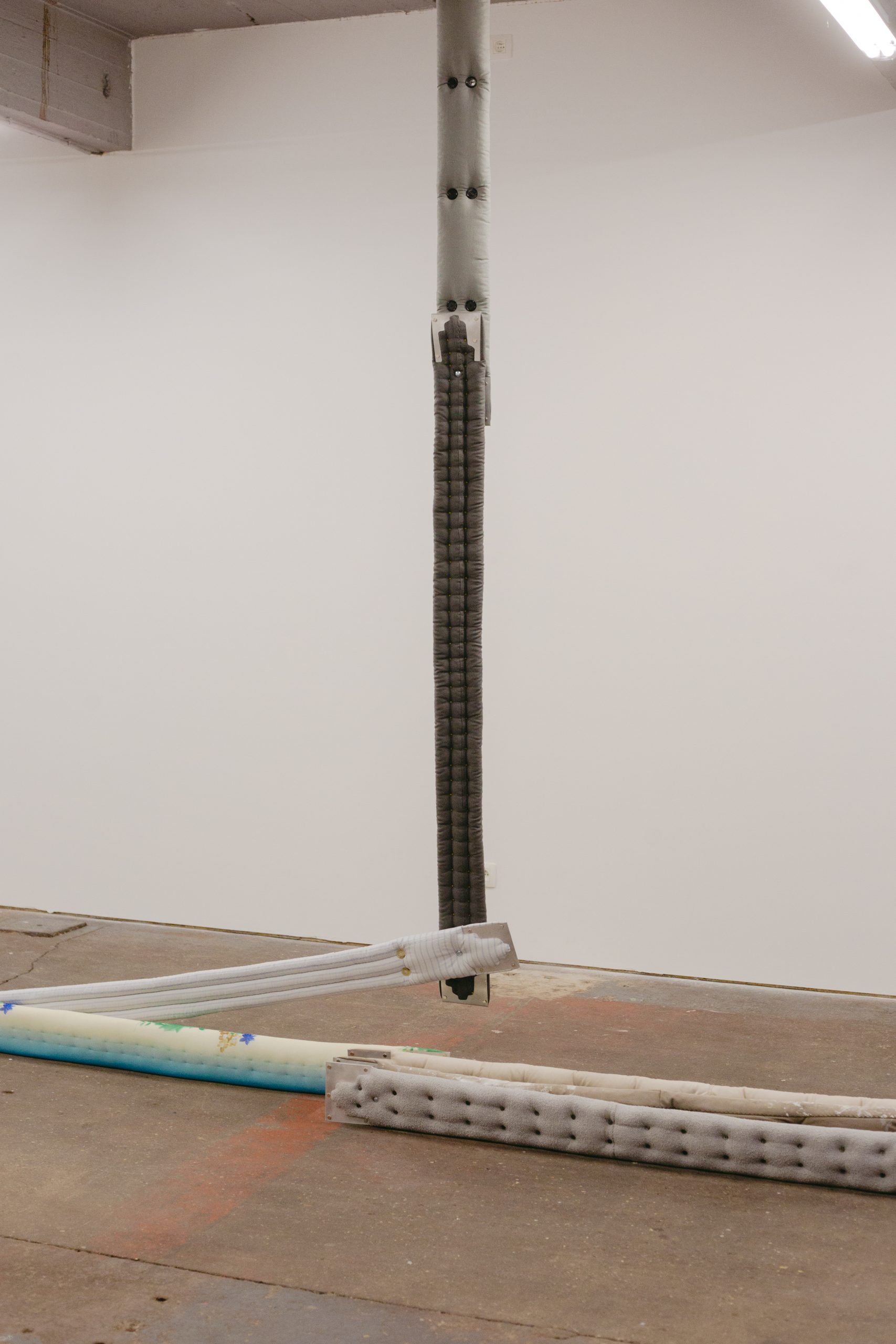
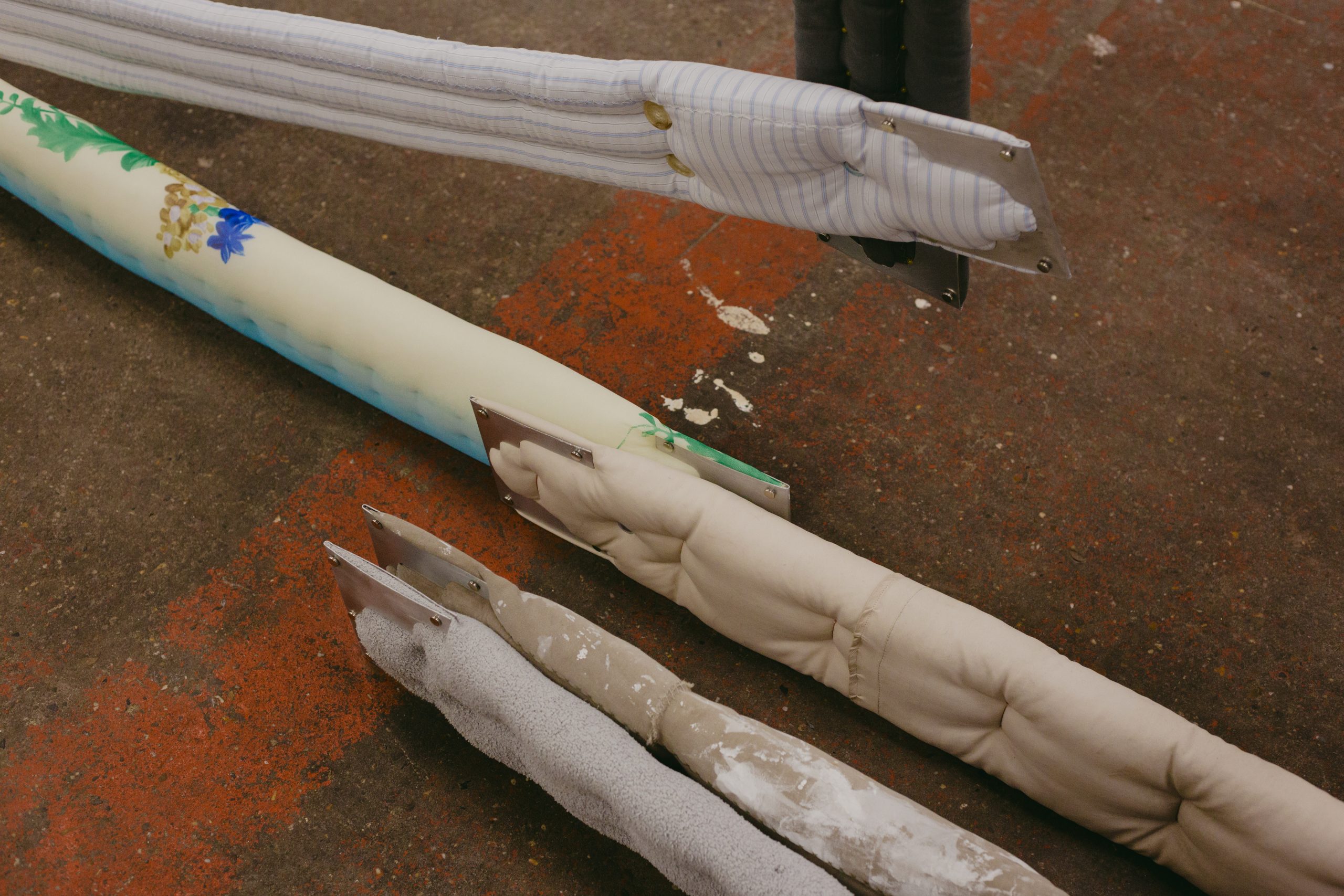
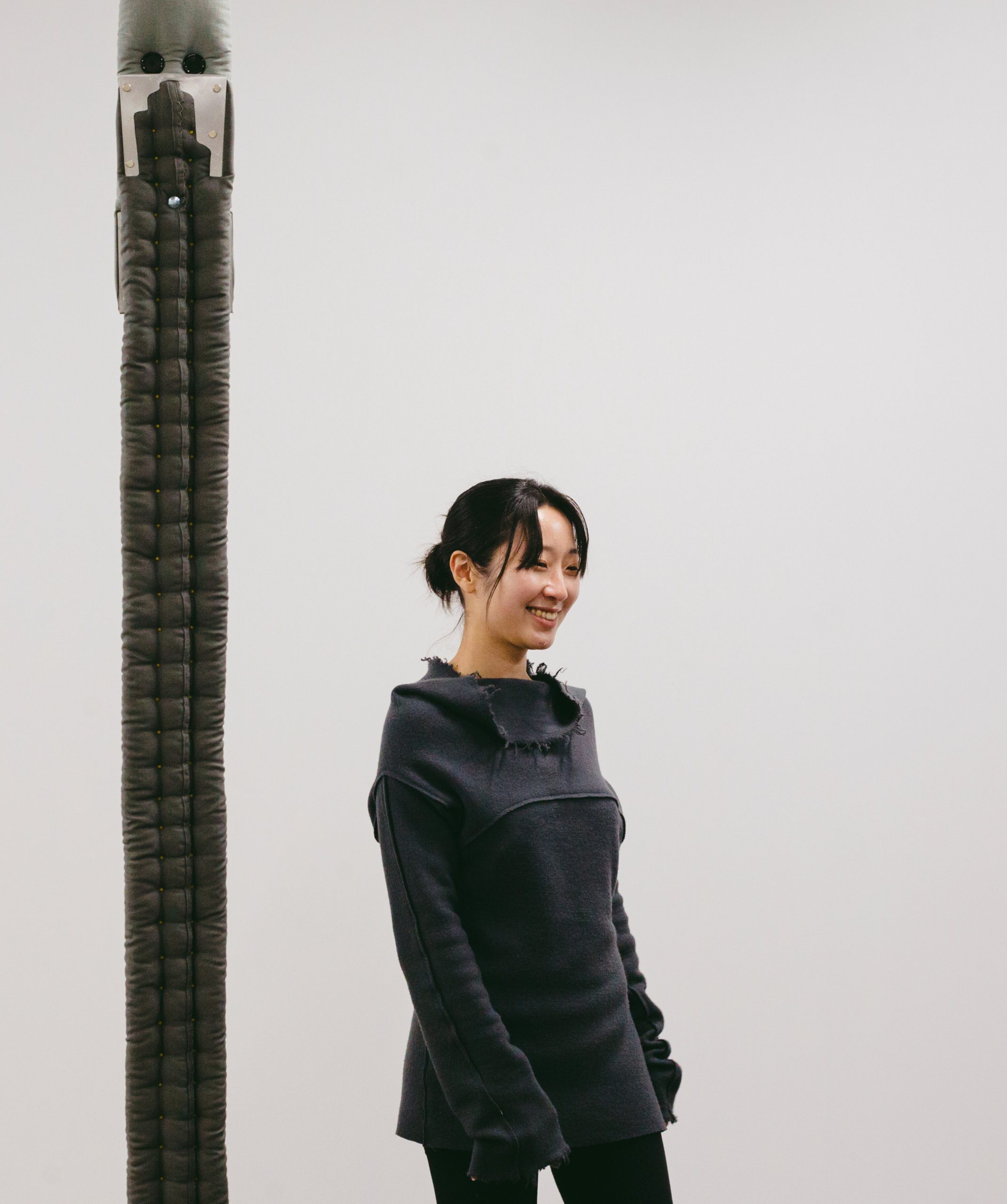
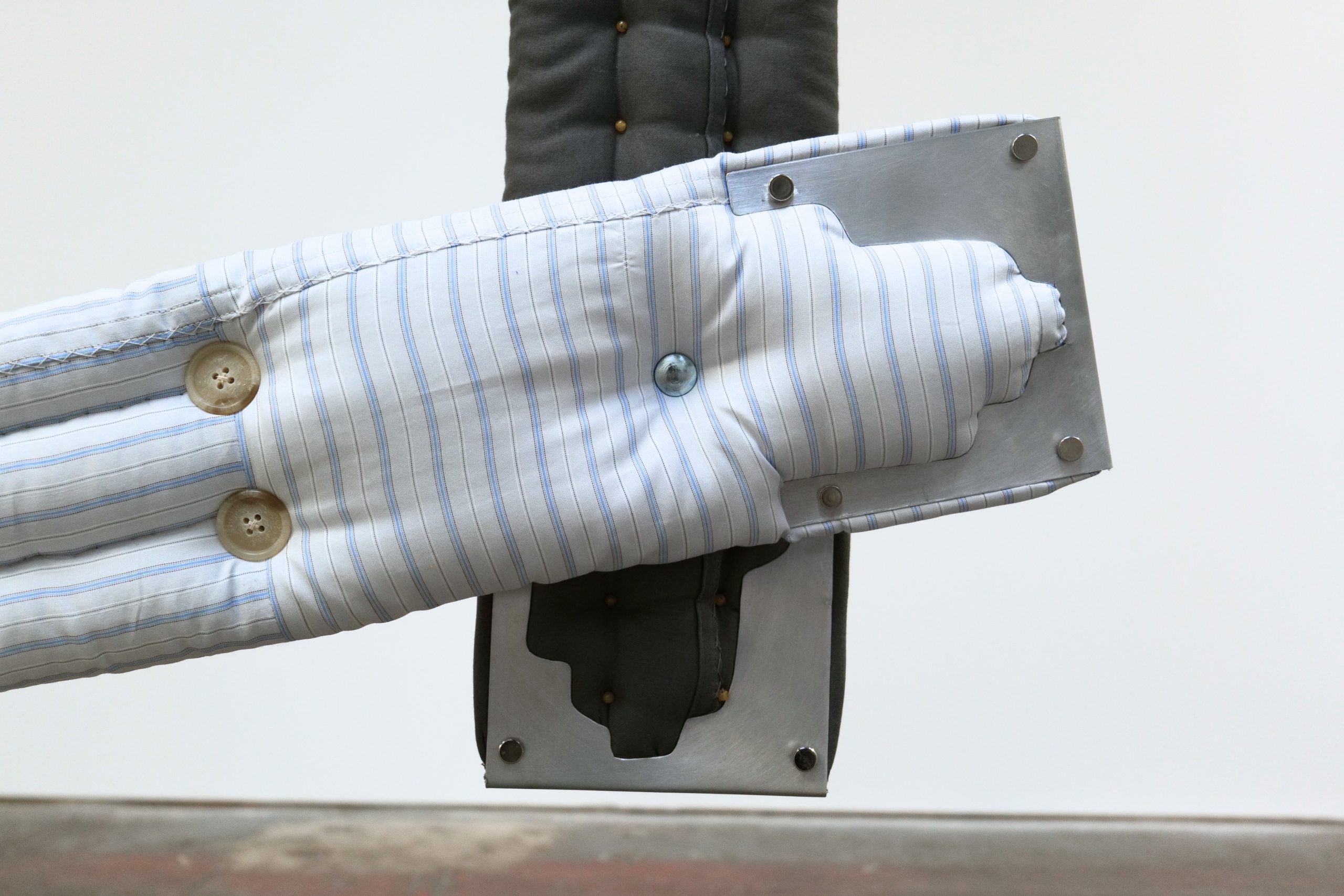
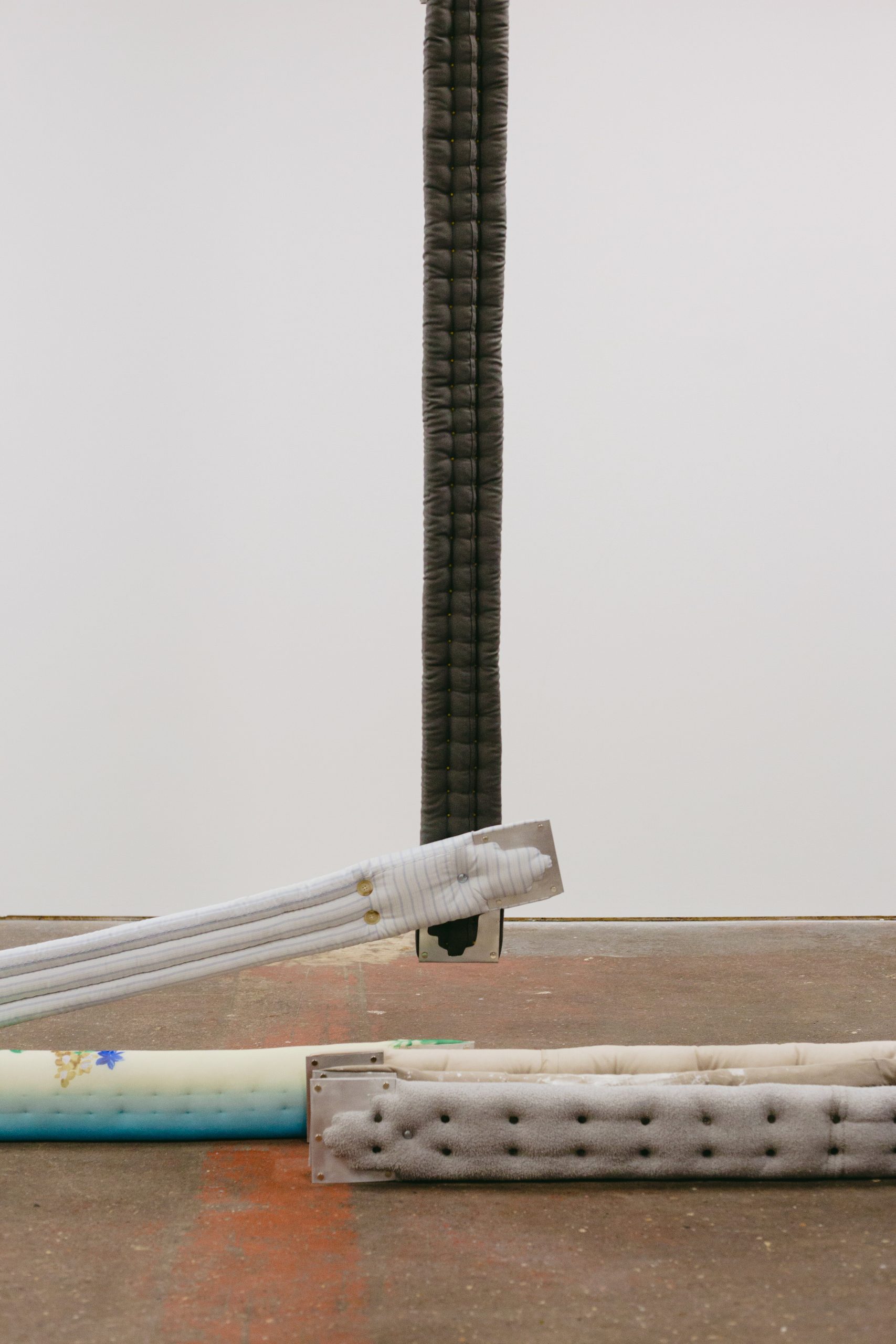
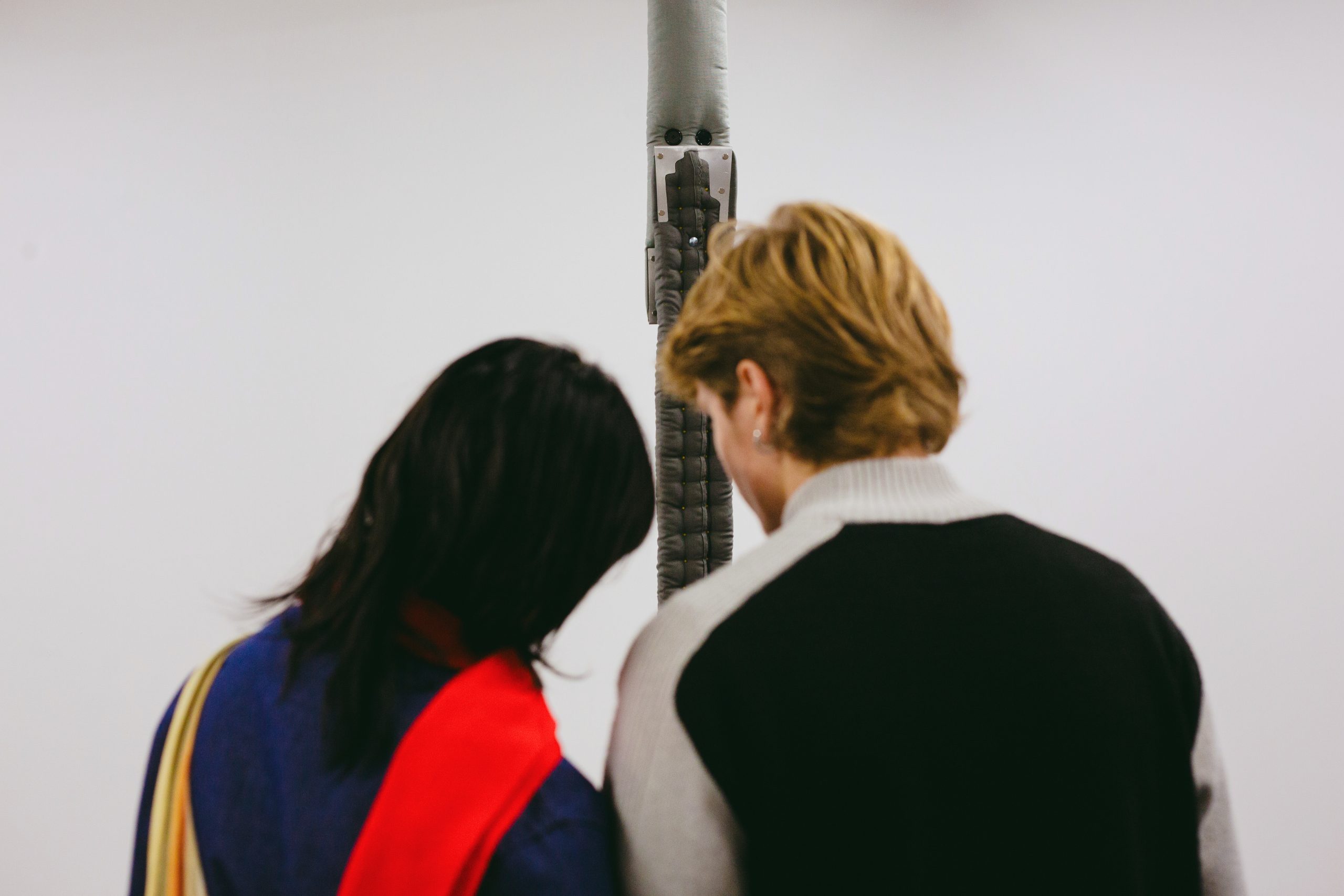
The Sense of Being Us | 2025, Sculpture (Textile, aluminium, wadding, threads, plastic bar, stainless steel joints, 188x47x5cm/closed or 1142x15x10cm/opened)
The Sense of Being Us is a foldable ruler based on the ‘areum’ of the eight people who created this exhibition together.
An ‘areum’ is a traditional Korean unit of measurement, referring to the distance from fingertip to fingertip when one stretches their arms wide, or the amount one can embrace with both arms.
Each ‘areum’ in this work is made from textiles worn or used by the participants, such as pants, a gown, a bedsheet, a scarf, or a coat. Buttons and sewing details on each ‘areum’ indicate how the individual measured their span — not with standardized tools, but with objects from their daily lives: a brush, scissors, a stone, a string, a bottle, an A4-paper, or a camera.
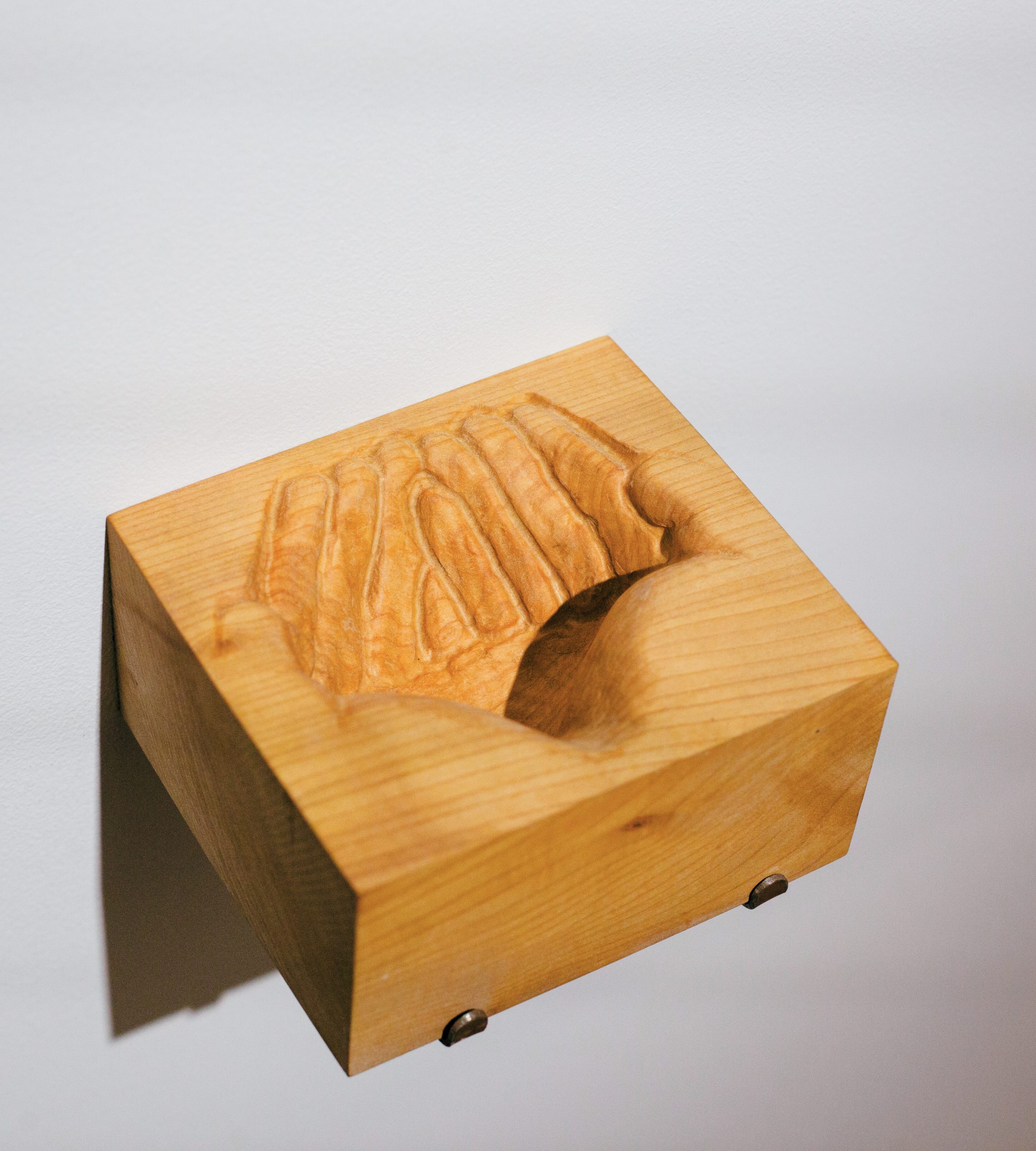
Jidoe | 2022, Sculpture (Wood, 14×12,5×7,5cm)
Jidoe is a unit of measurement based on the size of Jiyoung Chu’s hands. The ‘Ji’ in Jidoe comes from the artist’s first name, Jiyoung, while ‘Doe’ refers to a traditional Korean wooden measuring container historically used for measuring grains.
One Jidoe equals the amount of rice that fits into Jiyoung’s cupped hands, as measured in November 2022.
Rik Van Gorp
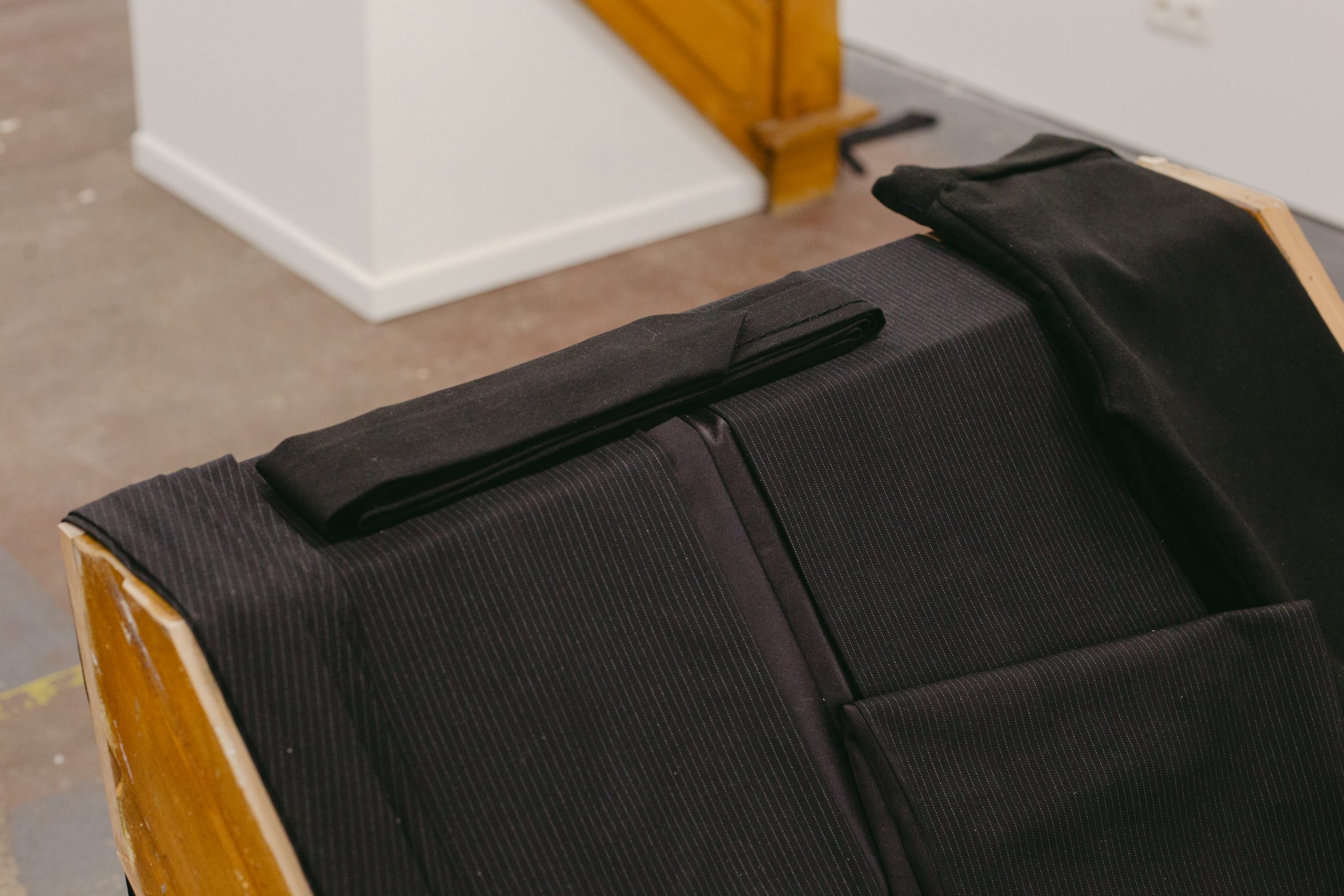
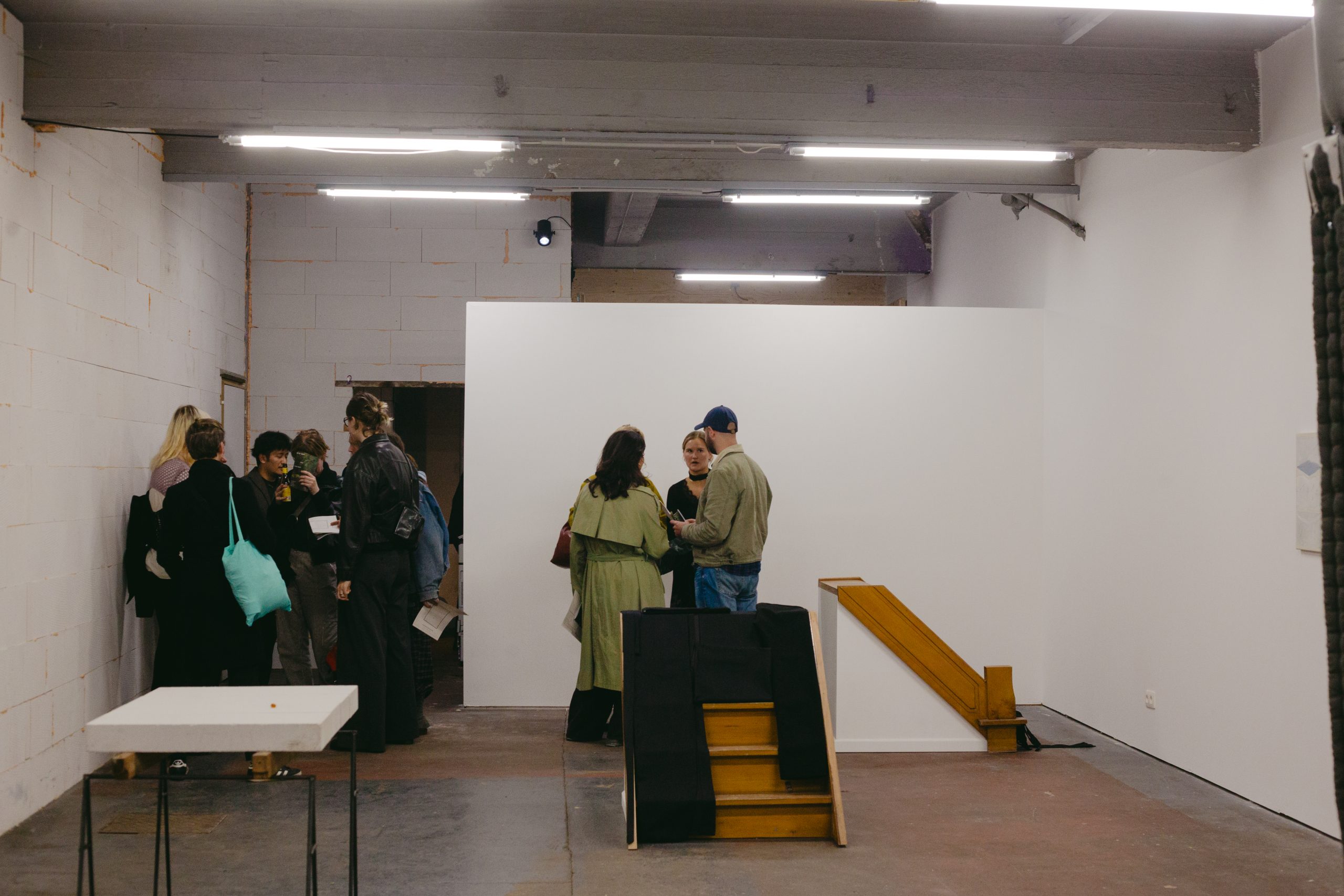
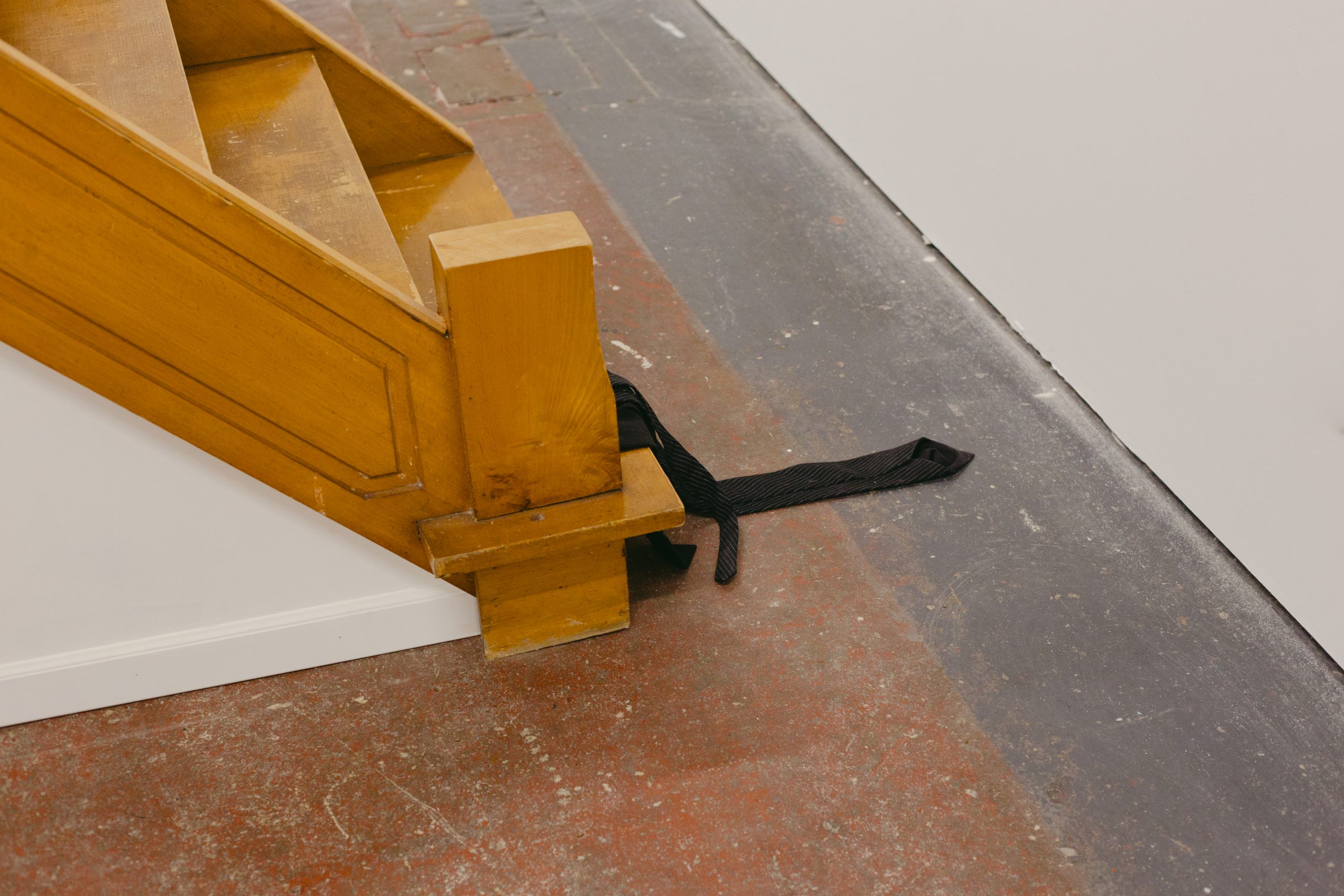
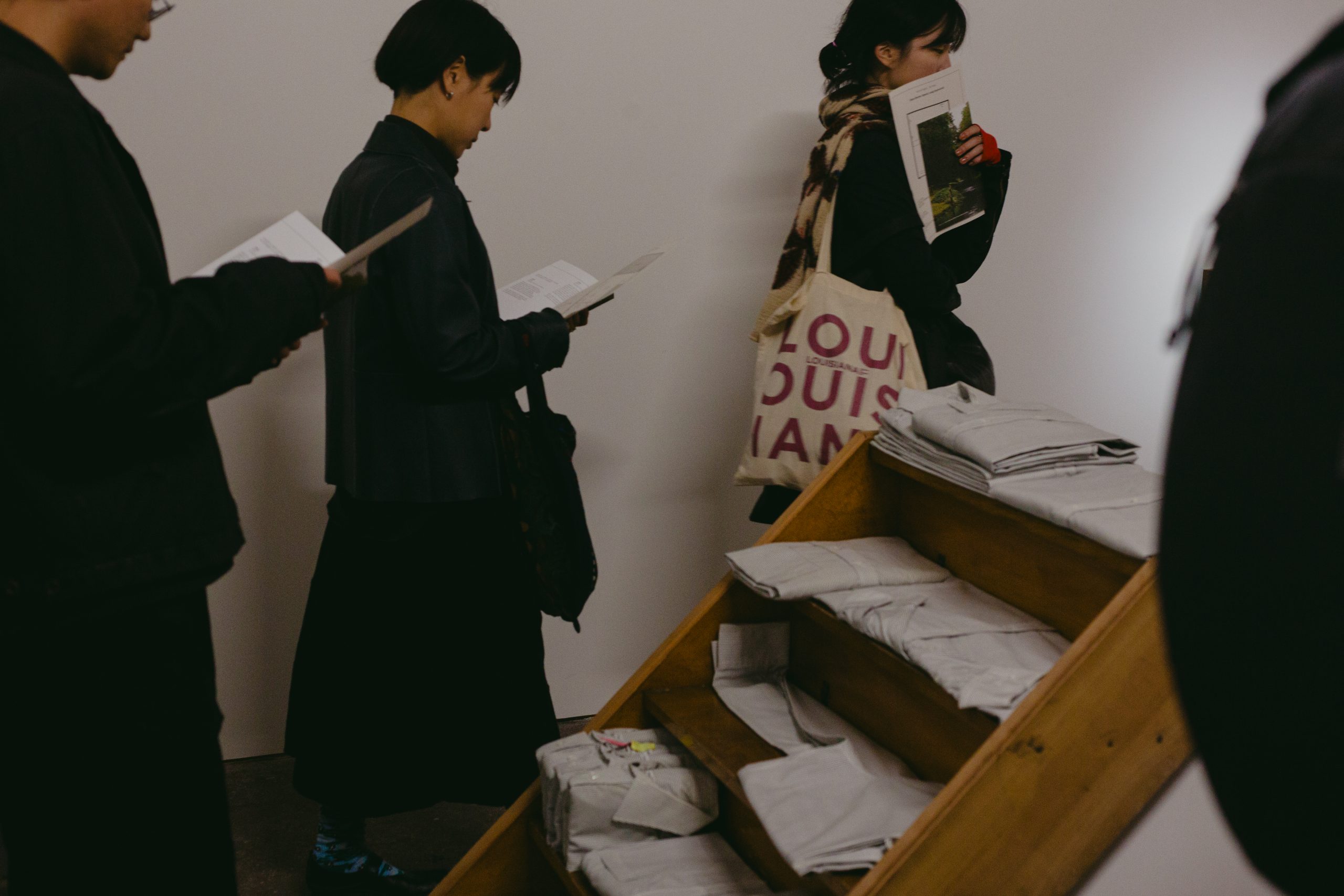
Bleu, Black, Mauve | 2025, Installation (Wood, textile, variable dimensions)
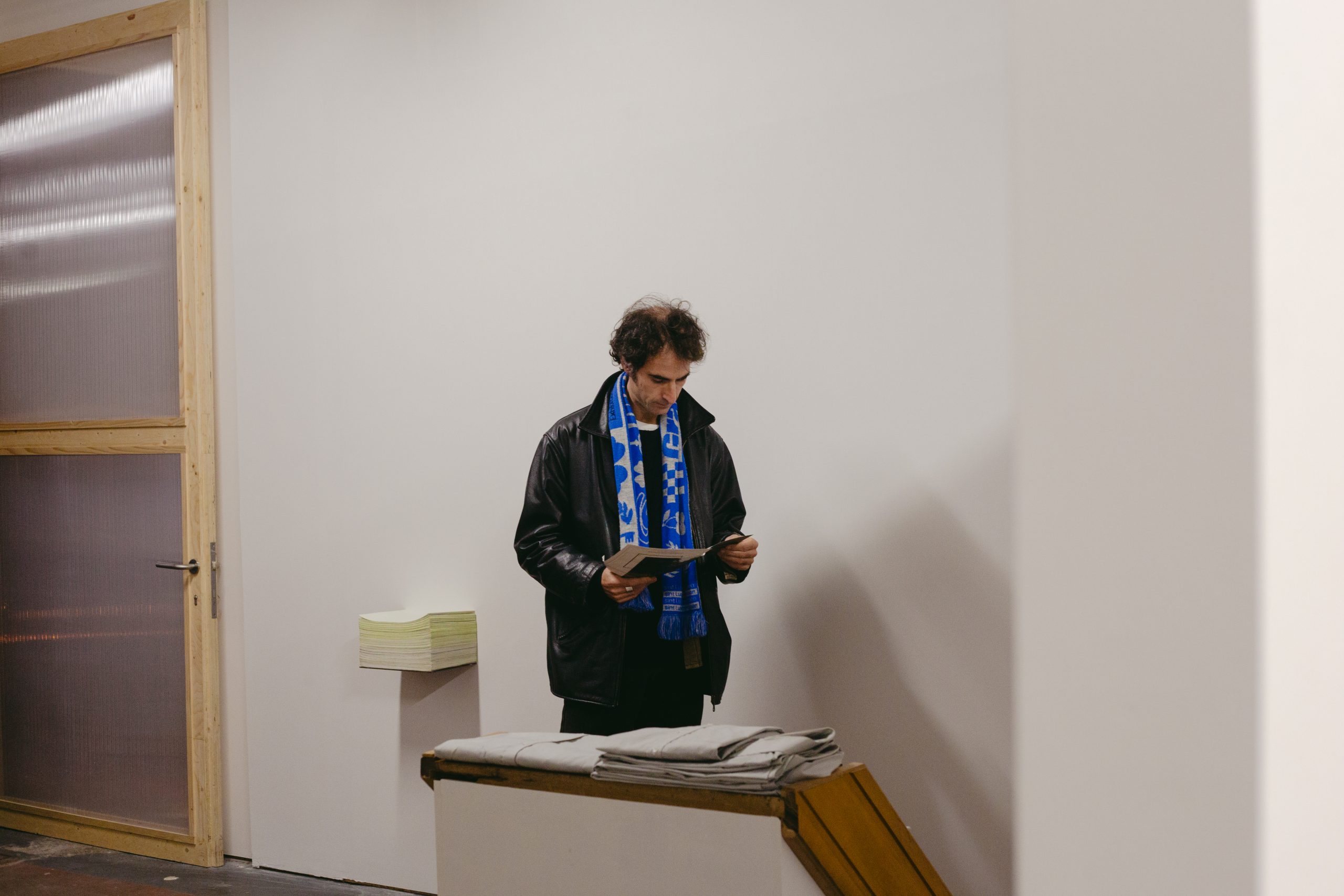
Every household with a staircase knows the ever-changing pile that gathers on the bottom step. Placed there in the morning by one person, moved in the afternoon by another. Whether it’s freshly folded laundry or a bundle of toilet paper, it’s as constant—and as changeable—as the colour of your socks: different every day.
Bleu (1/3)
Black (2/3)
I never know where to store my ties.
Mauve (3/3)
I laid my clothes over there; the coat stand was full.
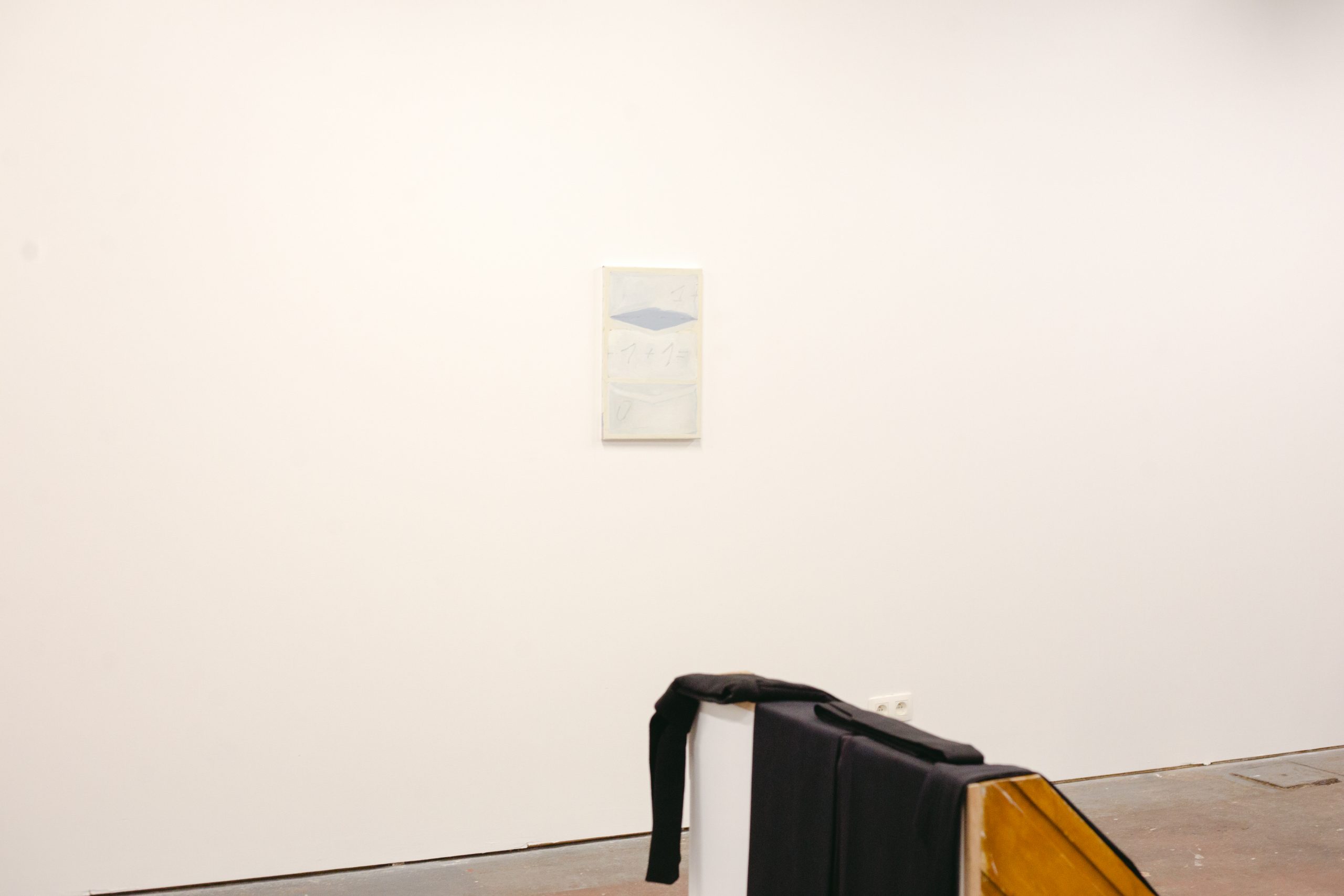
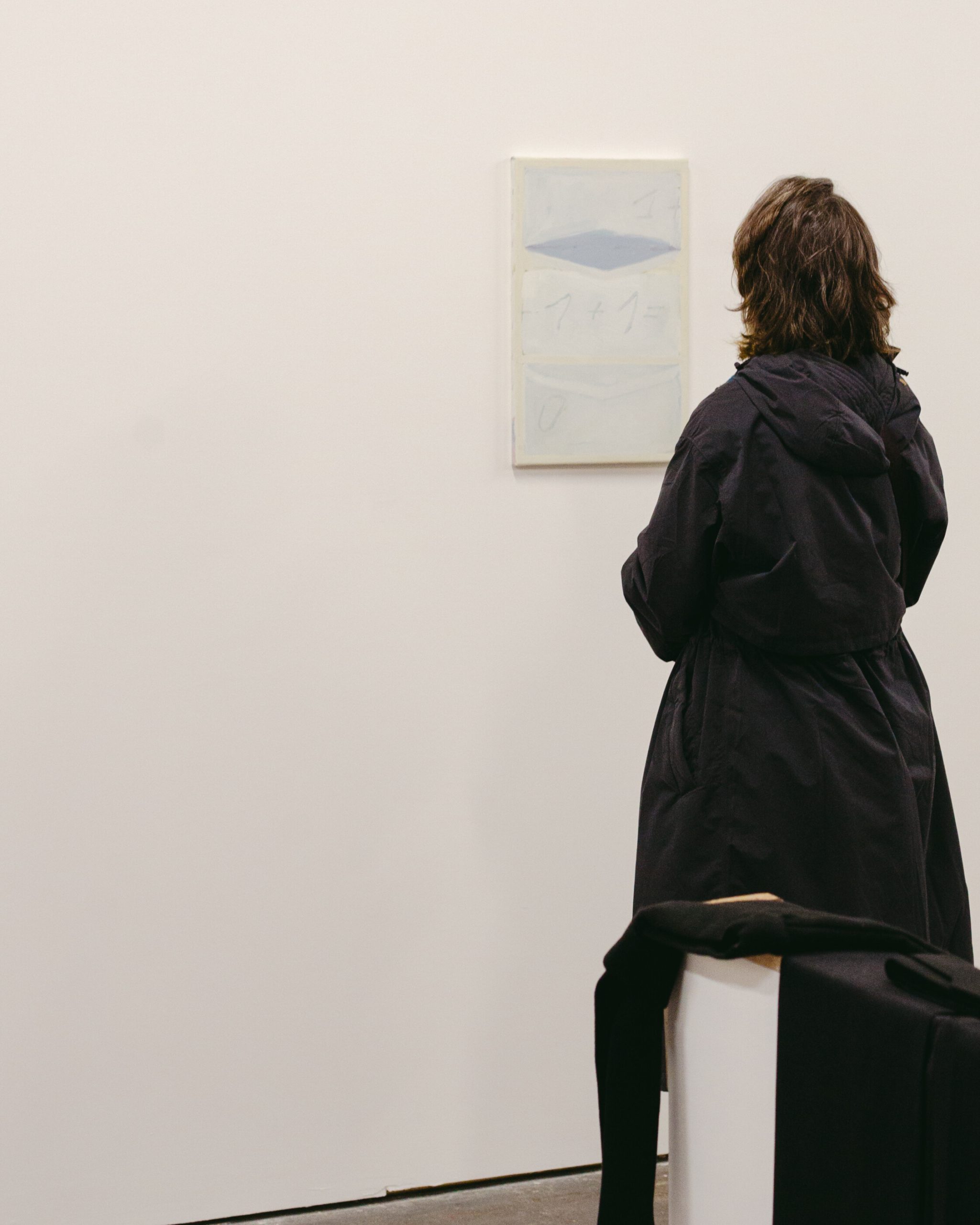
Send me one, I’ll send two back. | 2024, Oil on canvas
A letter is sent, arrives, is sealed, and opened.
Sarah Smolders
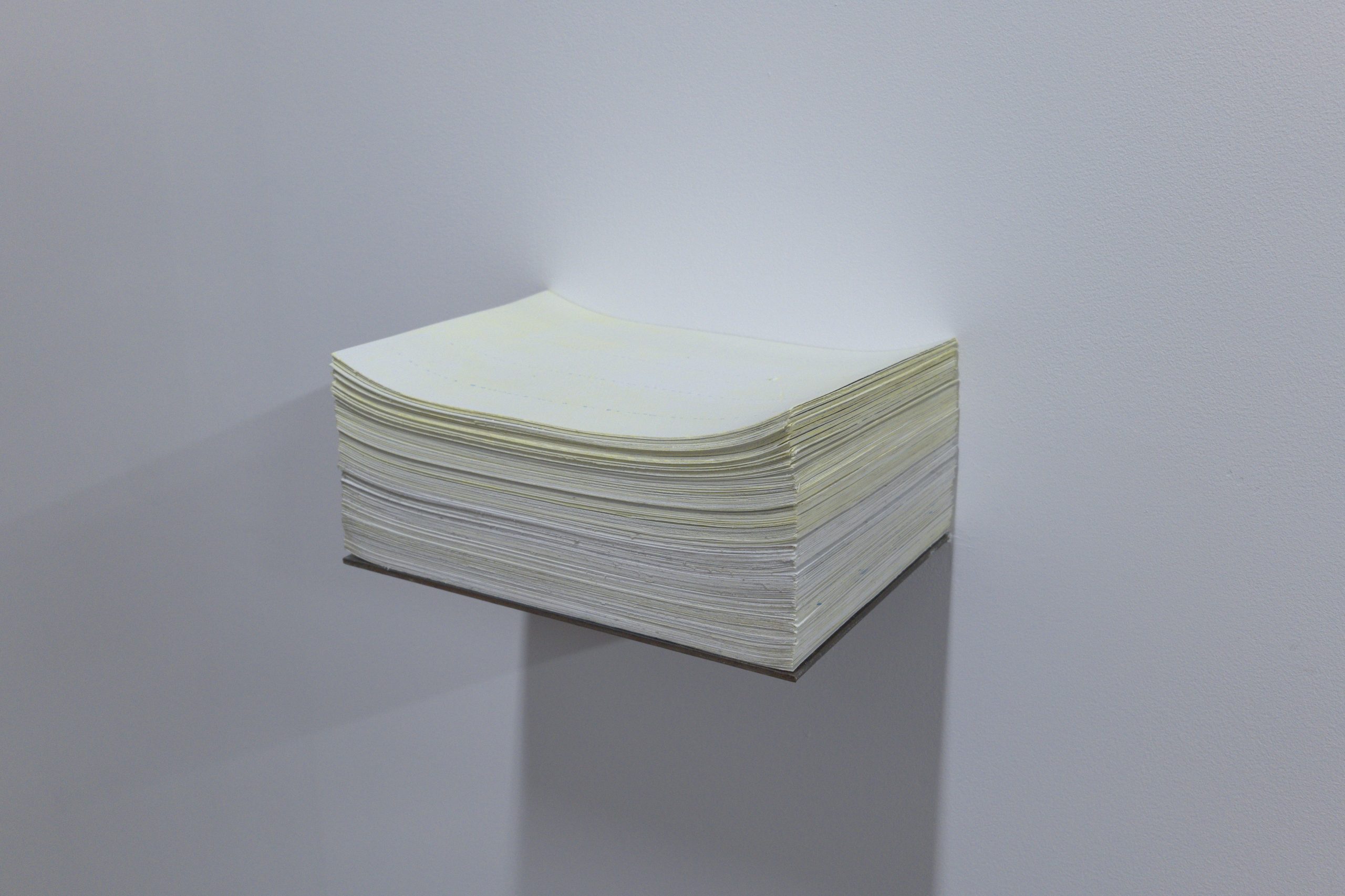
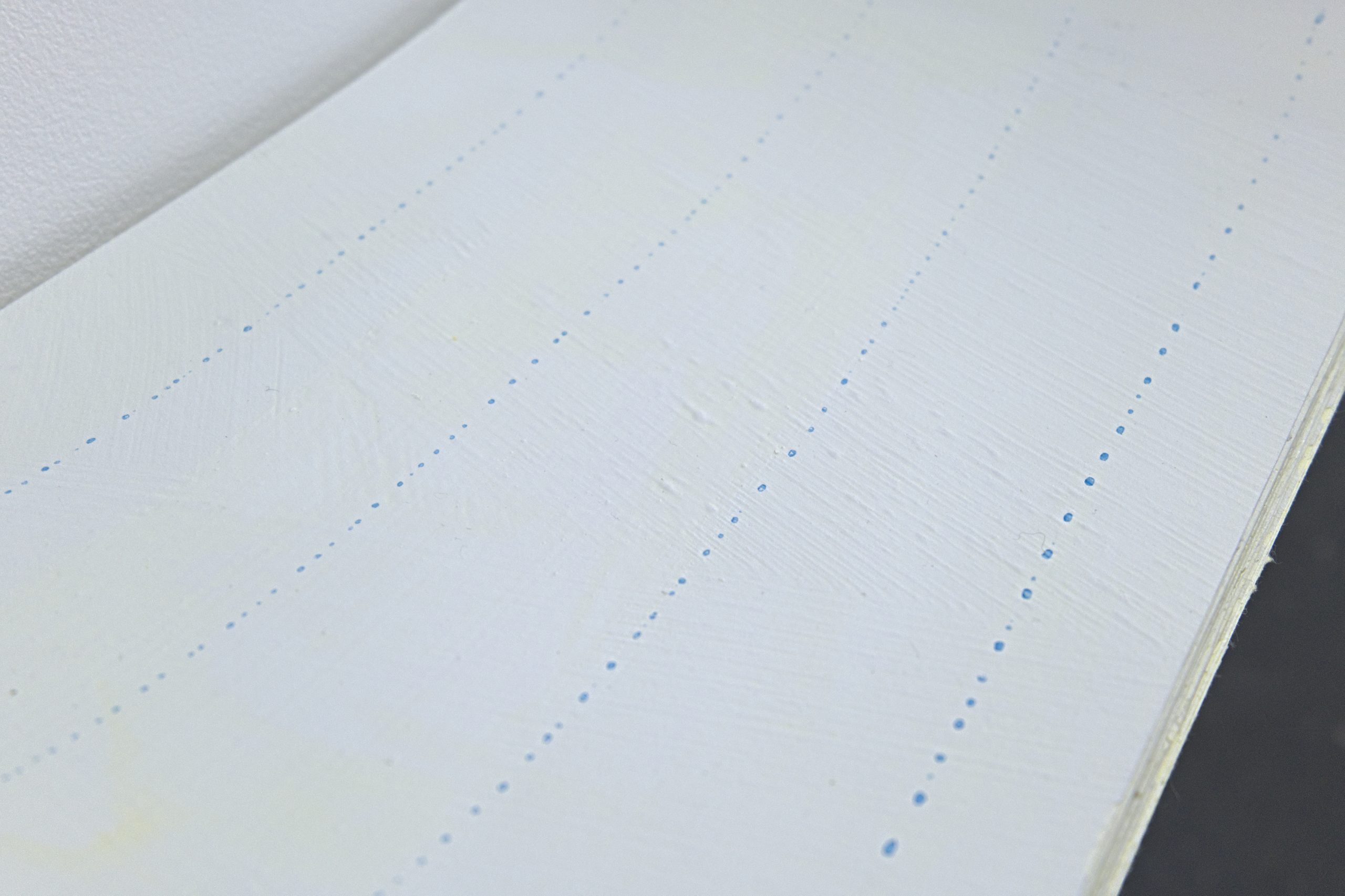
Notes on Places, 2025 | 2025, Acrylic paint, plaster, beeswax and watercolour on fiberglass, edition: 250
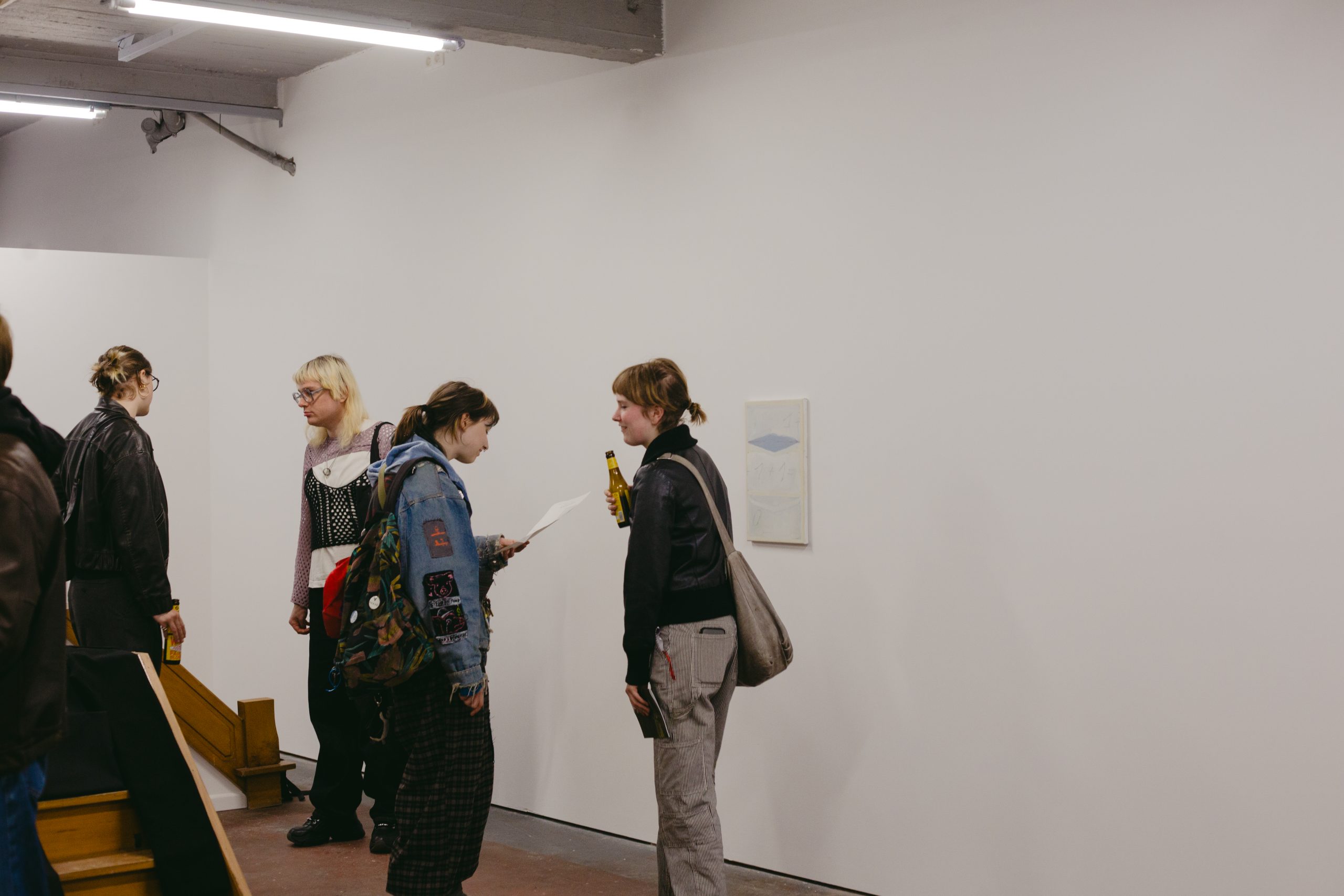
Notes on Places is a conceptual reflection on the language that accompanies and supports an exhibition. The classic format of the wall text printed on an A4 sheet has been retained, with the text replaced by an image that adds a direction for visiting the exhibition. Notes on Places, 2025 are uniques, in an edition of 250, numbered and signed. The images are intended to be picked up, turned around, and to accompany you to other spaces.
Rabten Tenzin
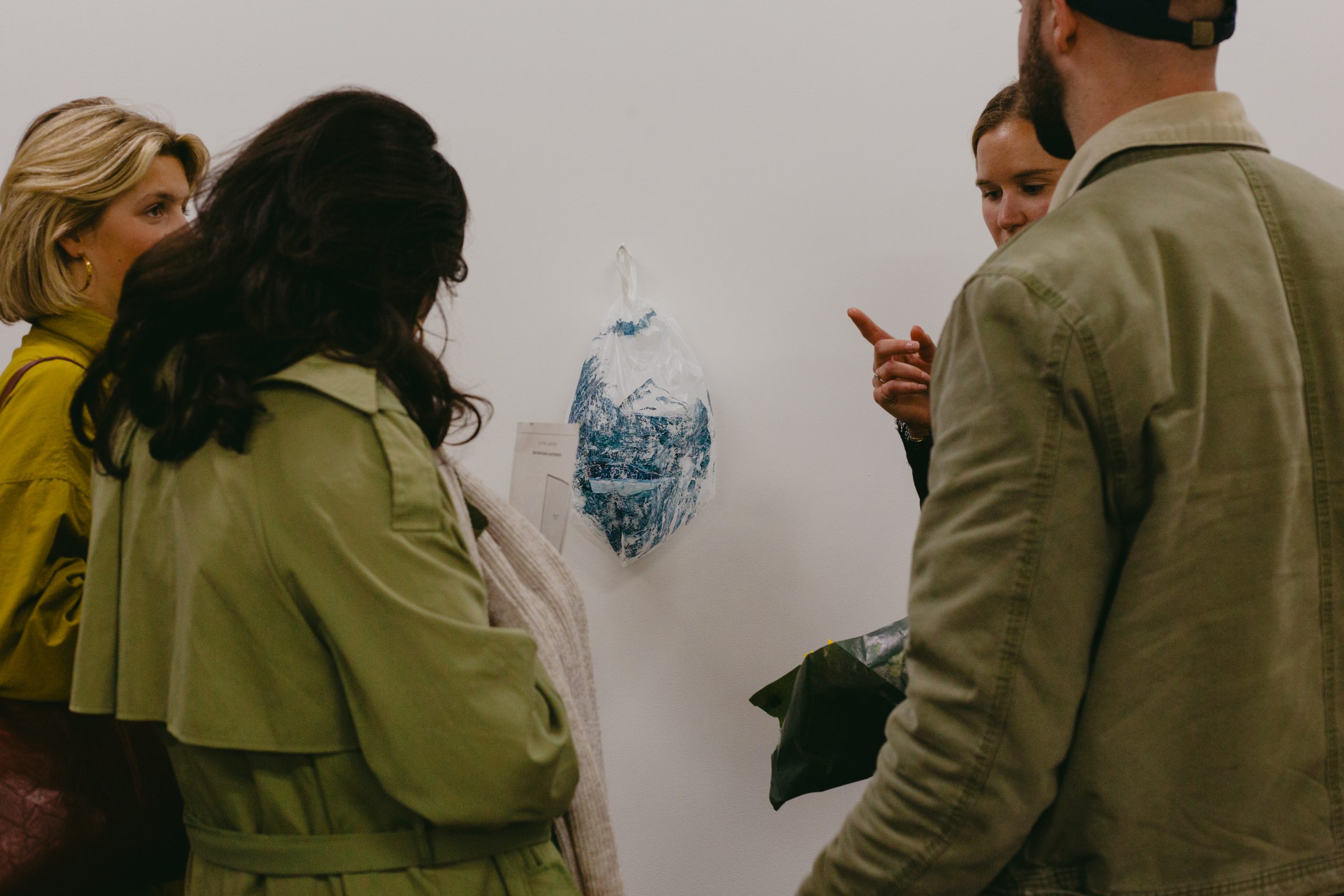
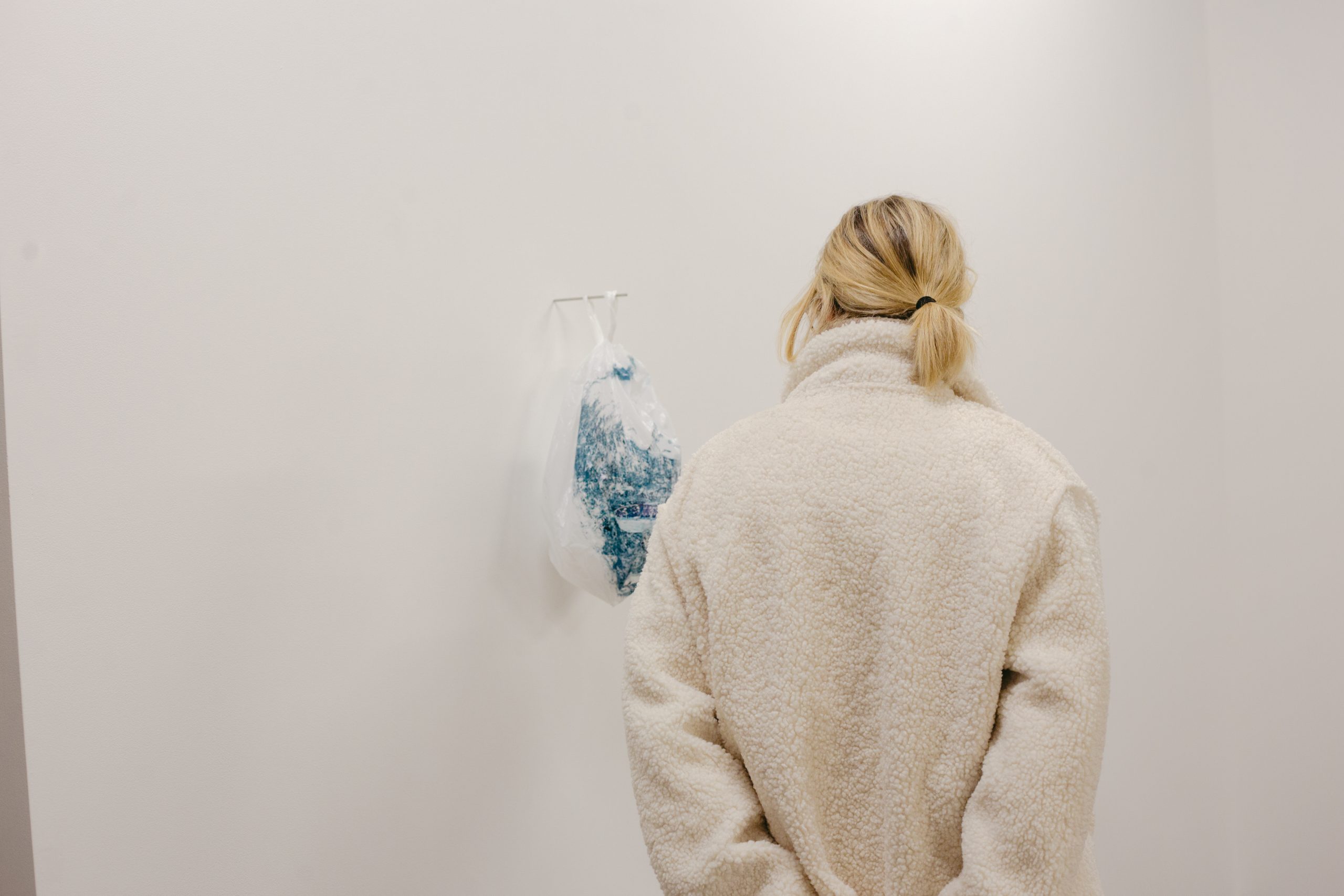
Soft Mountain | 2021, Painting (Calligraphy ink on plastic bag, variable dimensions)
A reflection on the imposing and seemingly eternal image of a mountain. Beyond its past, beyond geological metamorphosis that has been shaped over millennia. Portrayed on a light plastic bag with its ever-changing shape, whose form shifts with every subtle breeze and by movement of the body in a shared space.
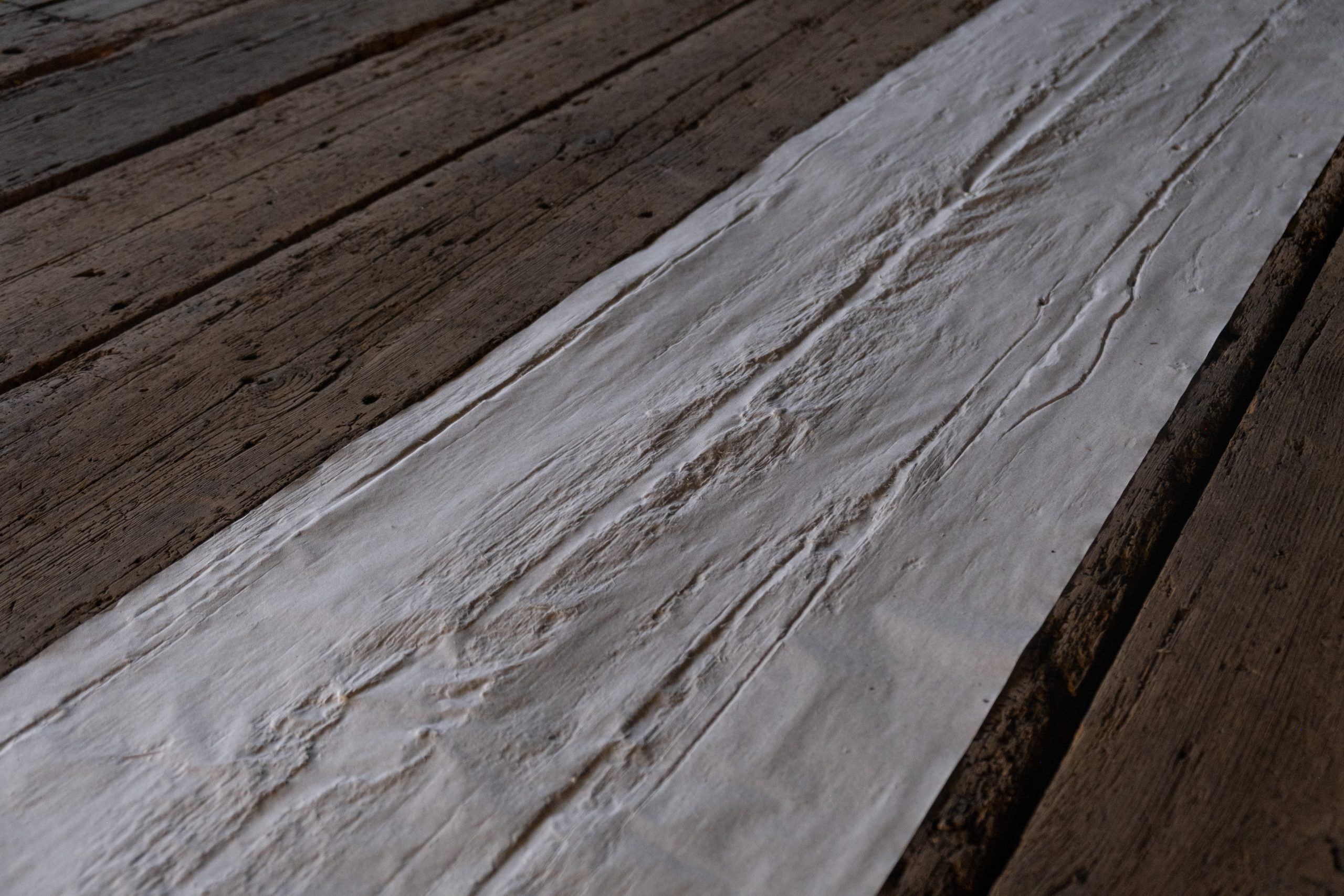
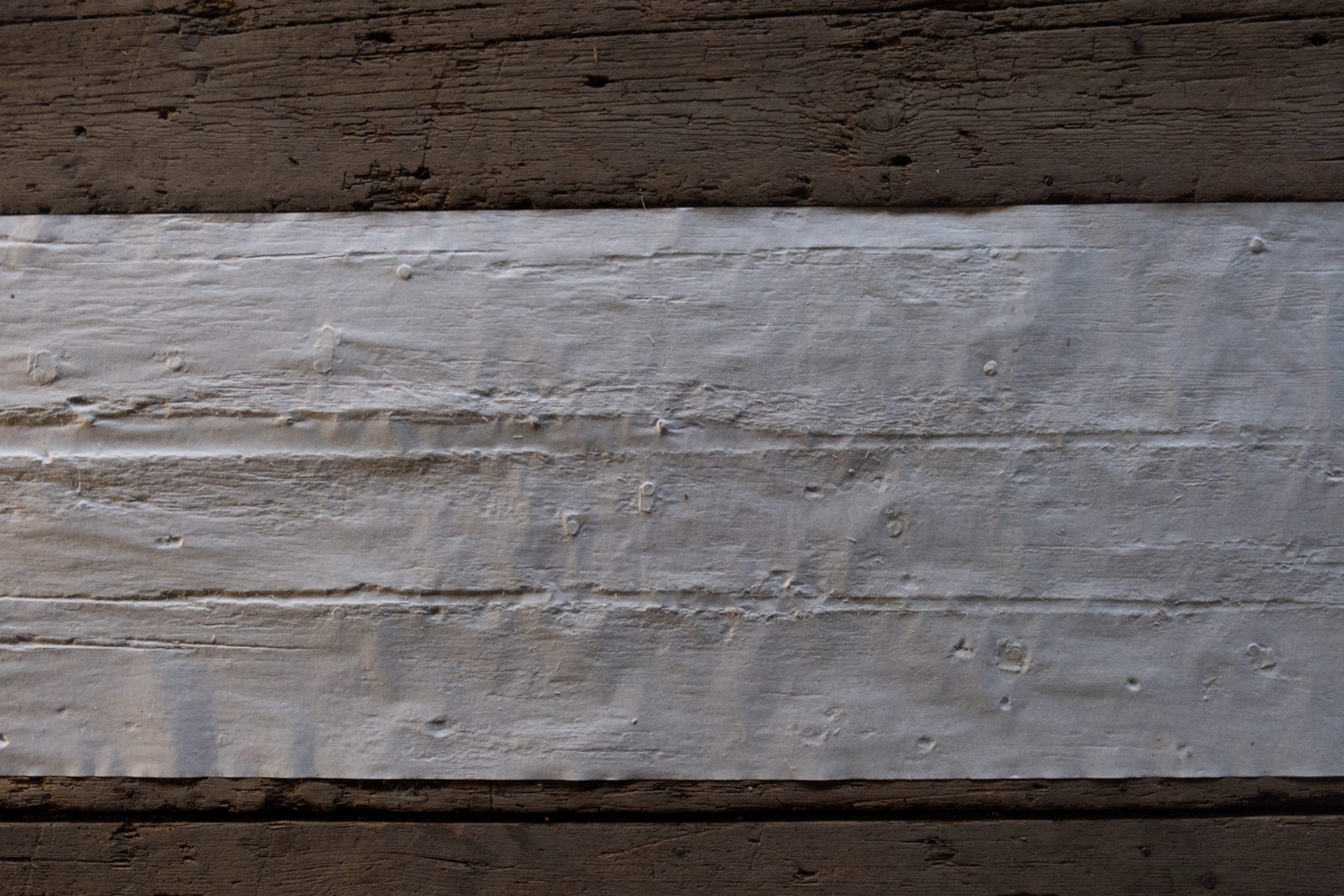
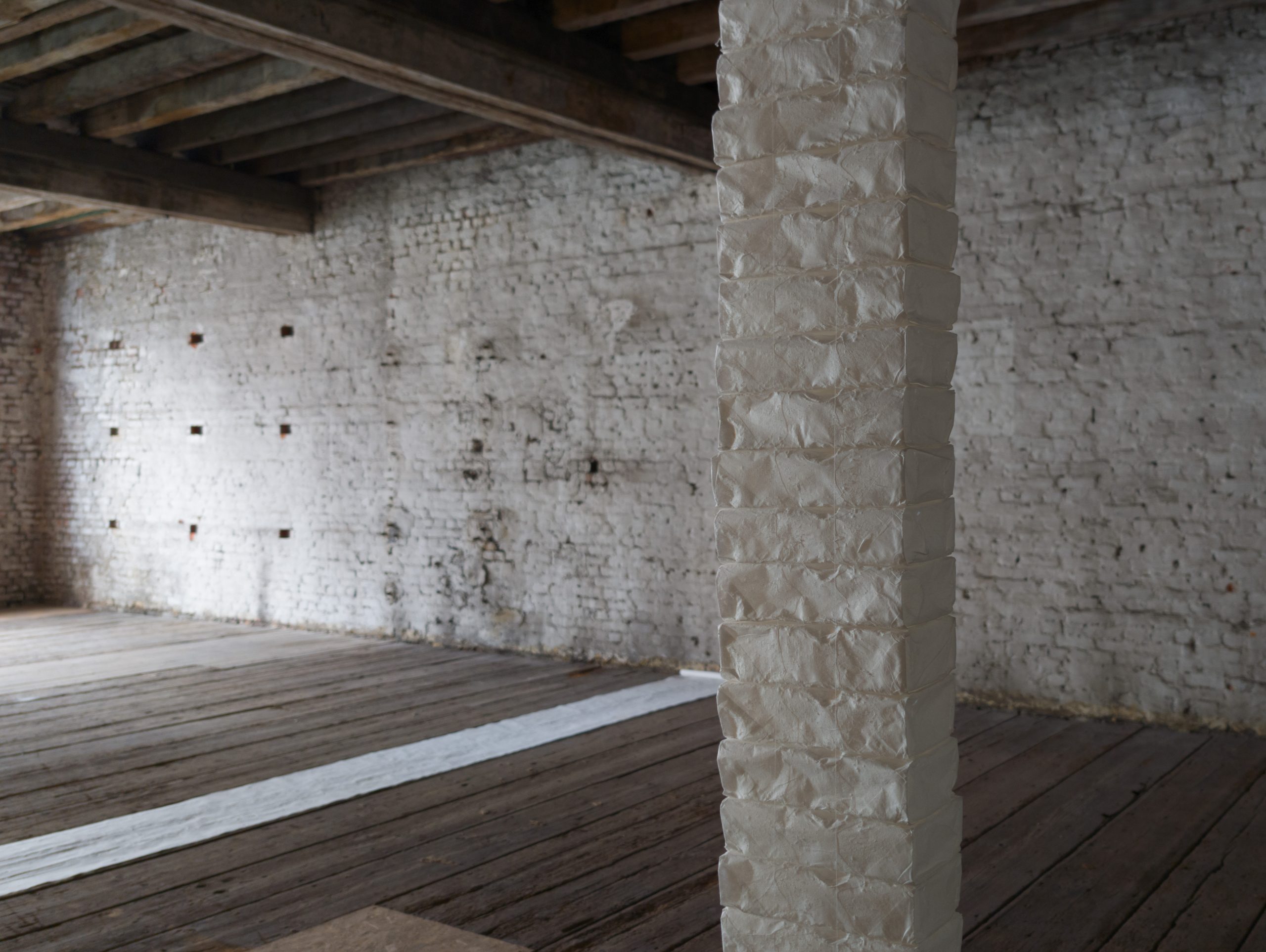
Removing and Collecting Dust | 2025, Installation (Rice paper and water, 800x46cm)
Removing and Collecting Dust is a way of experiencing space. With rice paper, water and by the act of touch, every crack, hole, nail and line on the wooden floor comes in direct contact with the body. The body which performs the labour of slowly and repeatedly removing and collecting dust.
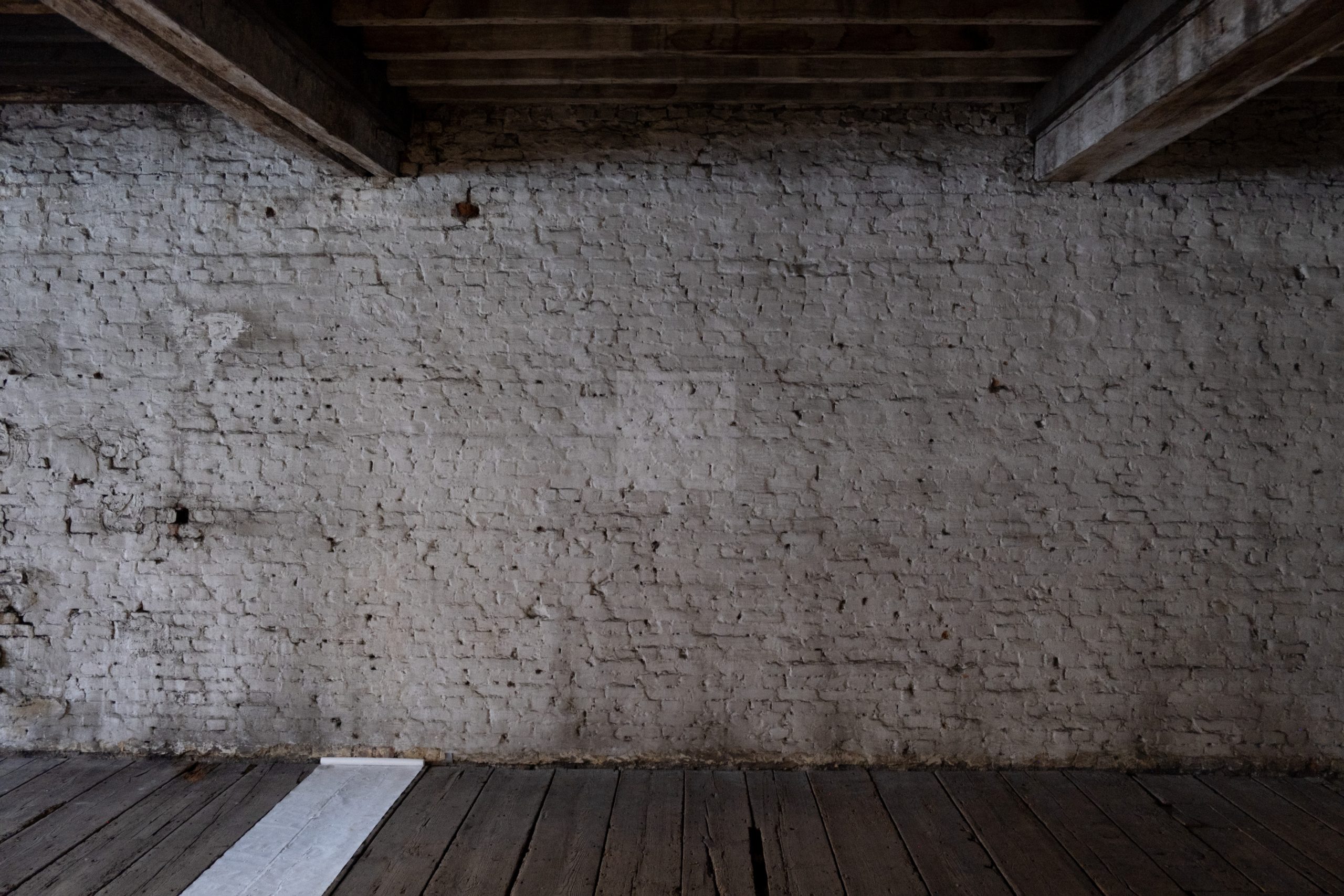
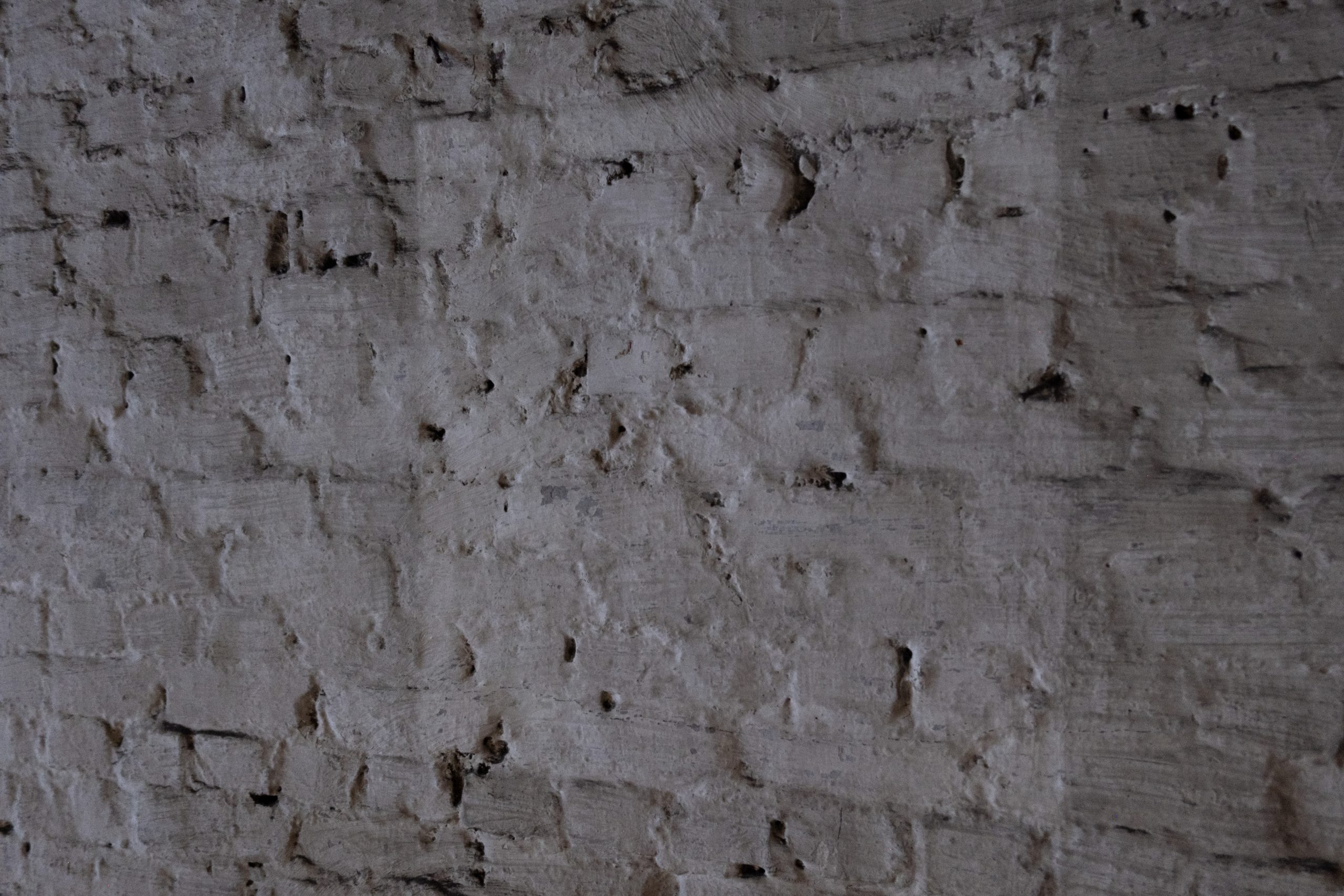
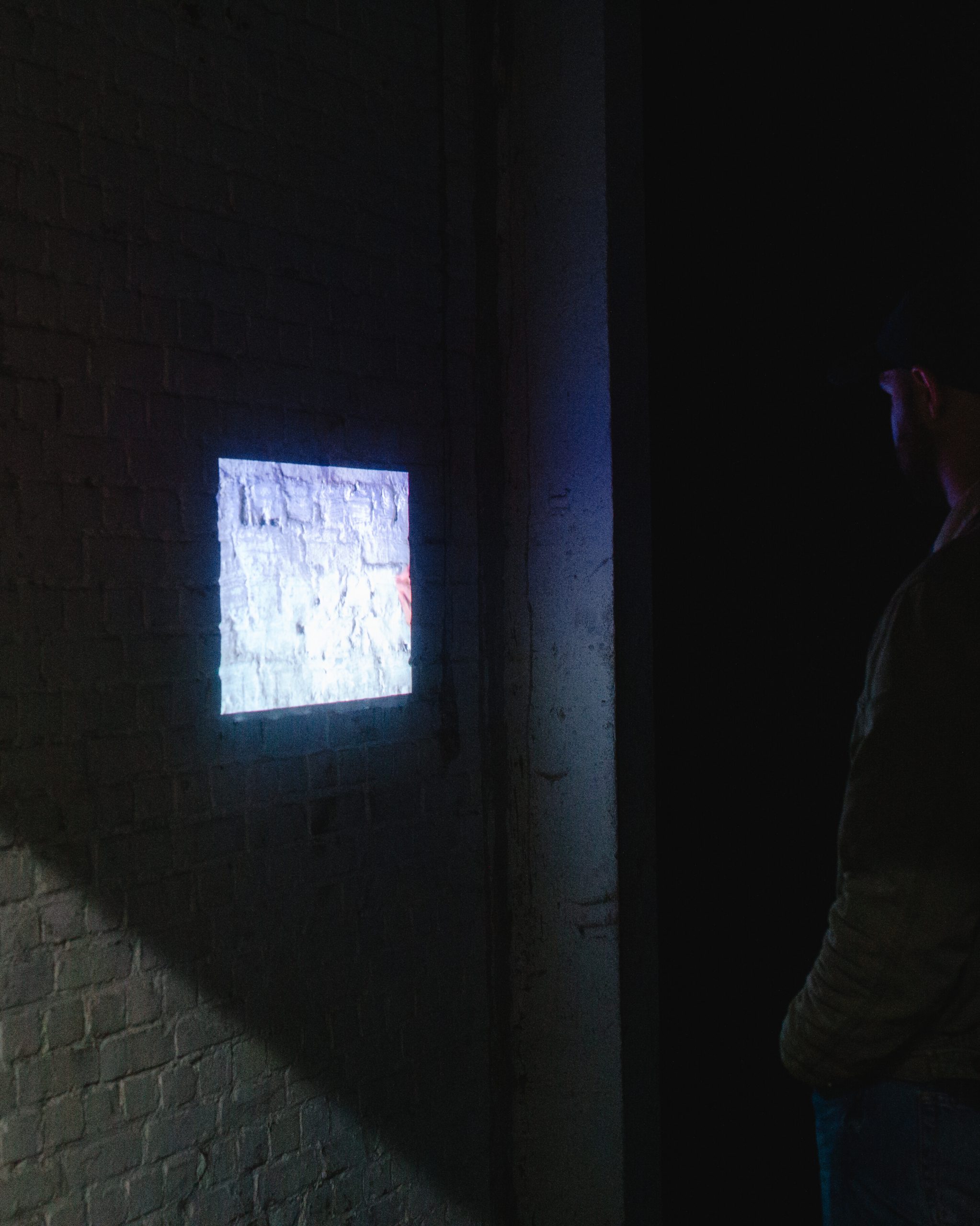
Removing and Collecting Dust: A Square | 2025, In-situ work on the wall (53x53cm)
A brick wall on the first floor of the Out of Sight building covered with dust. A subtle intervention in the space, performed by removing and collecting dust.
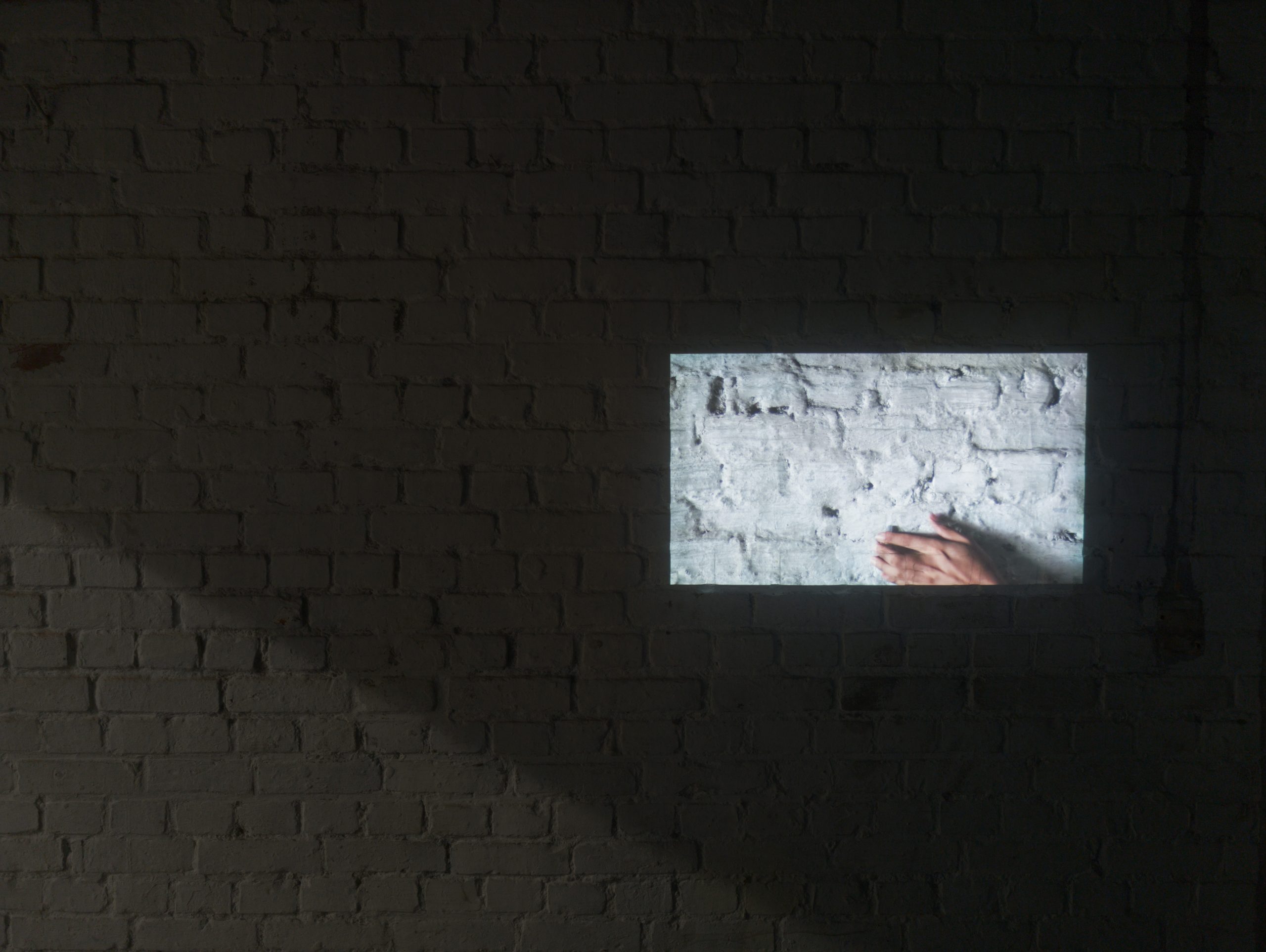
Through labour | 2025, Video (colour, silent, 11’31” in loop)
Through Labour was initially inspired by the invisible labour carried out by my mother. By placing the labour of ants in the same space as the documentation of the physical work performed for Removing and Collecting Dust: A Square, this gesture initiates a quiet dialogue—one that acknowledges the difference in scale and status, yet emphasises the shared physical effort of both ants and a human, each worthy of admiration.
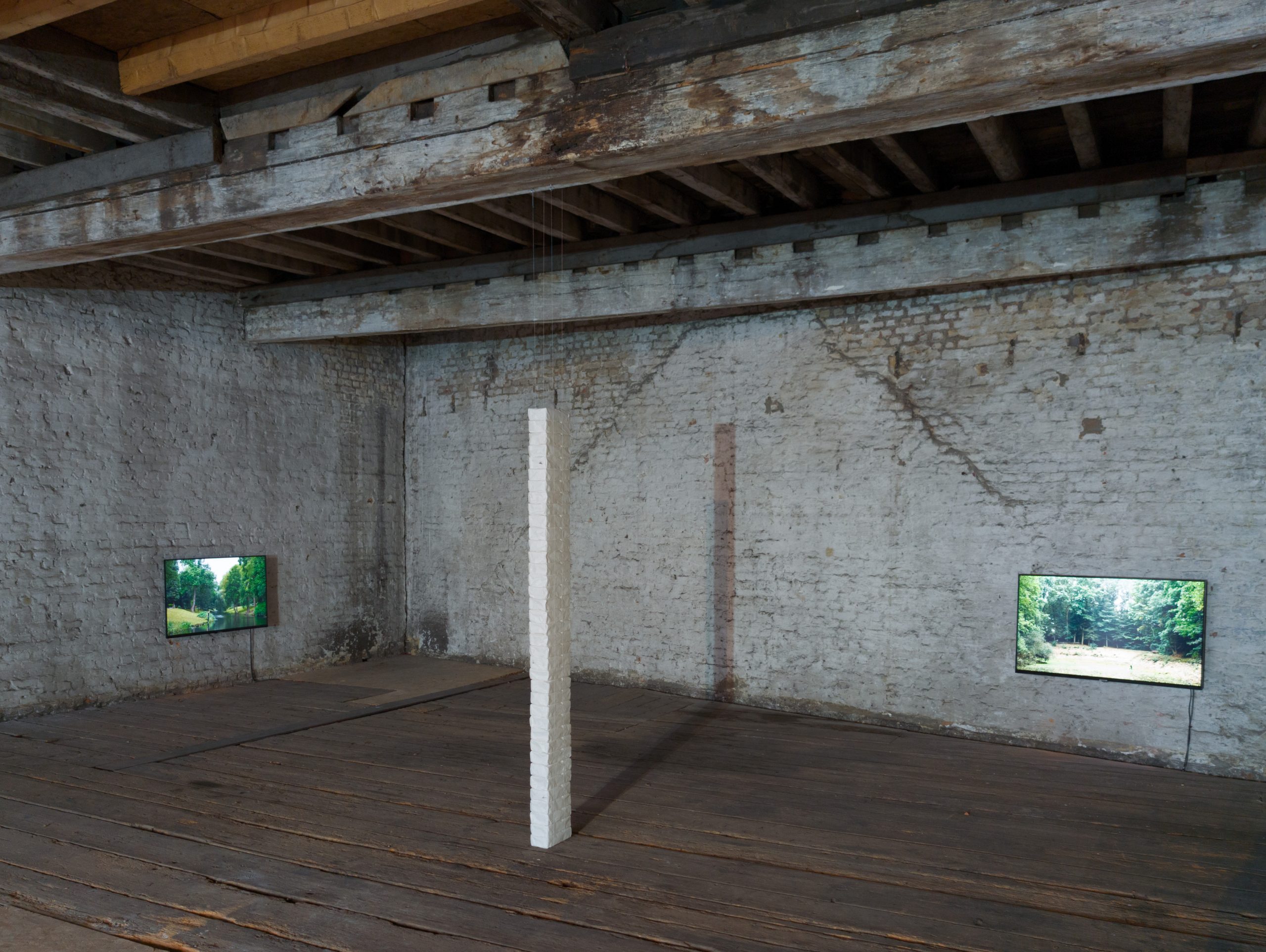
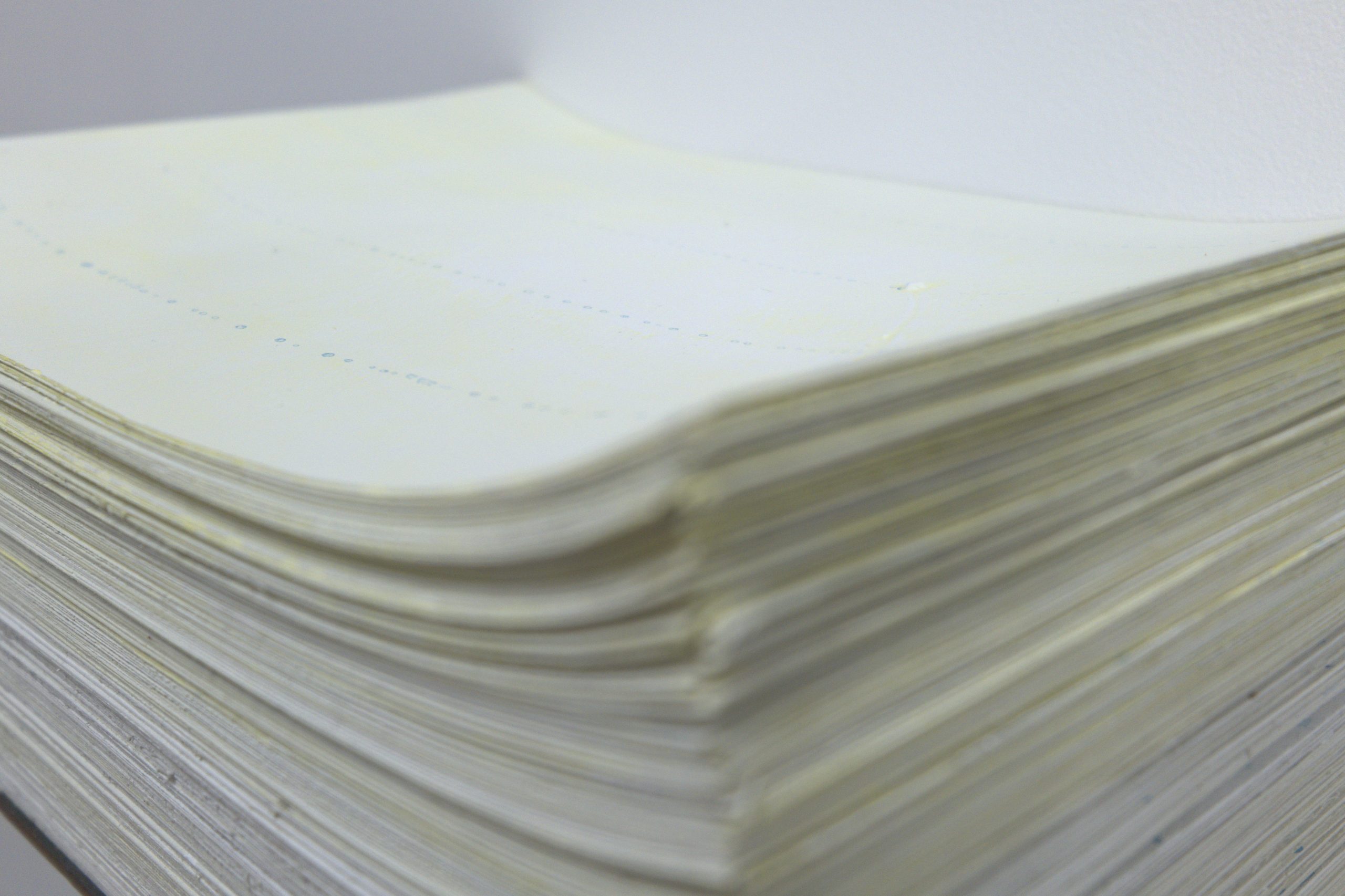
Brick by Brick: Self-Portrait | 2025, Installation (Rice paper, 10x 21x170cm)
Brick by Brick: Self-Portrait looks beneath the construction of Rabten Tenzin’s own identity. This portrait is built upon layered elements that constitute the self: identity, memory, ideology, experience, knowledge — all radiating from a central point called “I”. This “I” is experienced as something rigid, yet it lives within a fragile body.
That bodily fragility is echoed in the materiality of the work: rice paper and a delicate vertical structure. The installation is measured precisely to the height of the artist’s own body and responds subtly to movement around it.
(Slow Shutter Speed, Long Exposures)
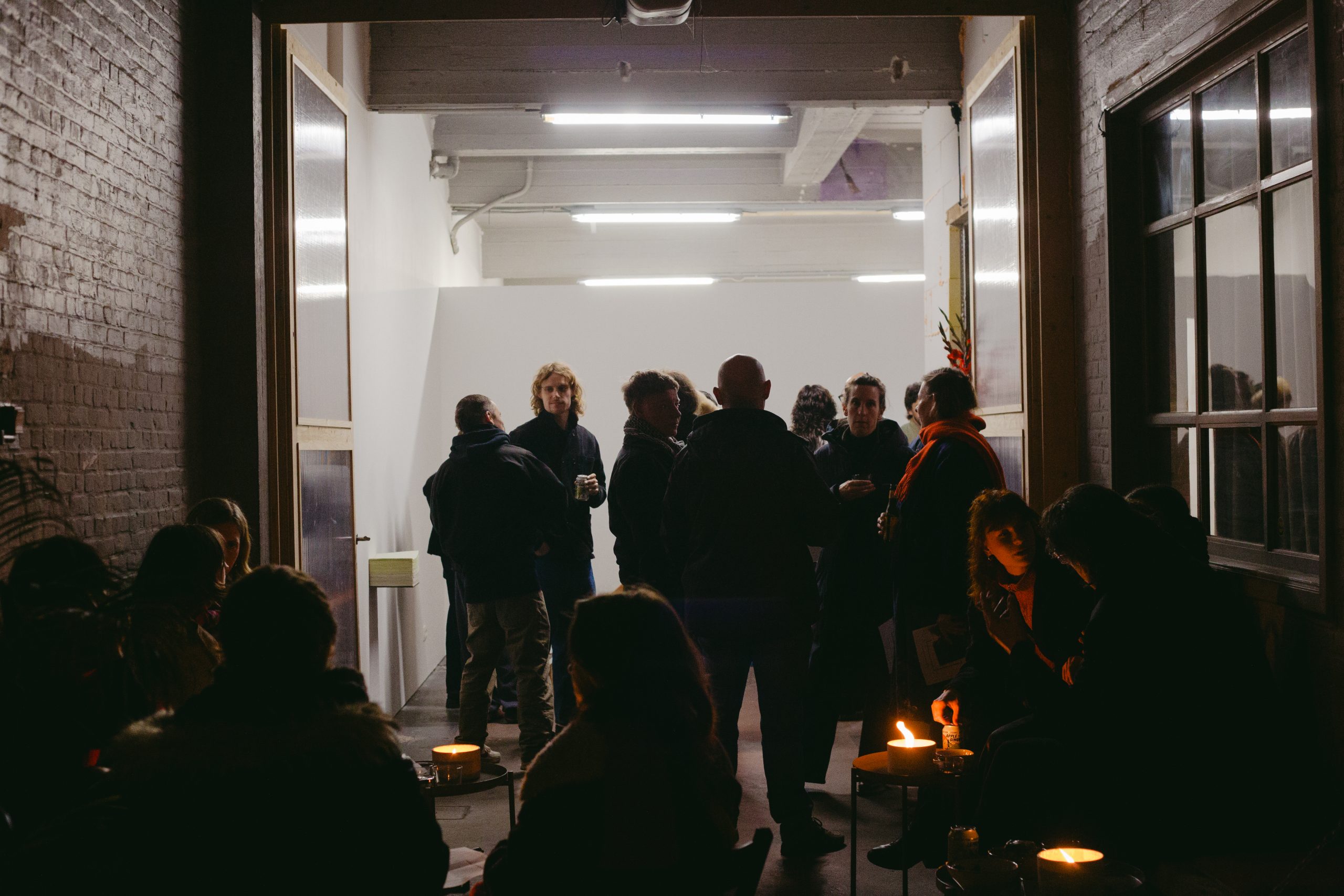
Photo-documentation of the opening by
More info: CLOSE ENCOUNTERS